My first spool scroll as an artist book prototype
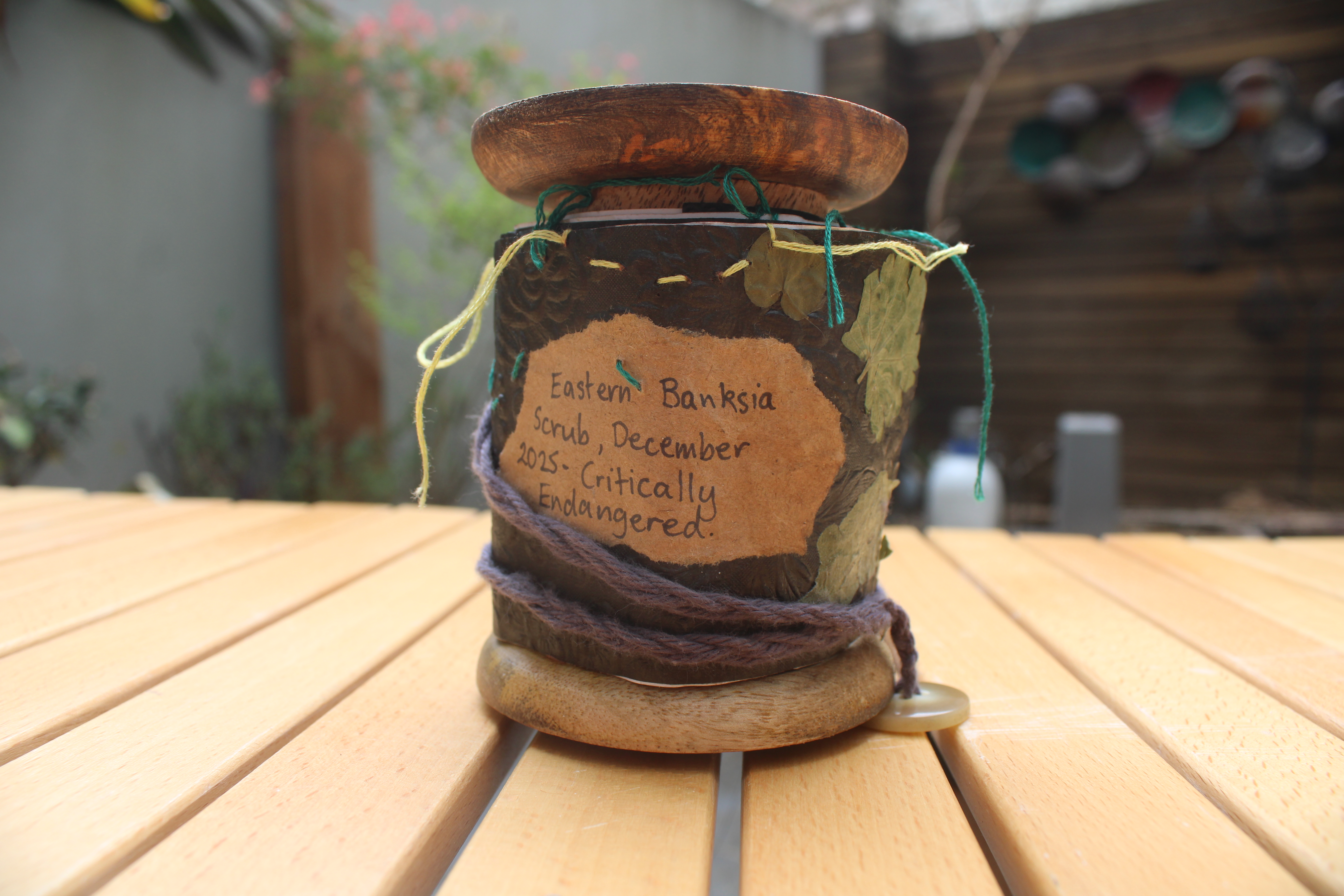
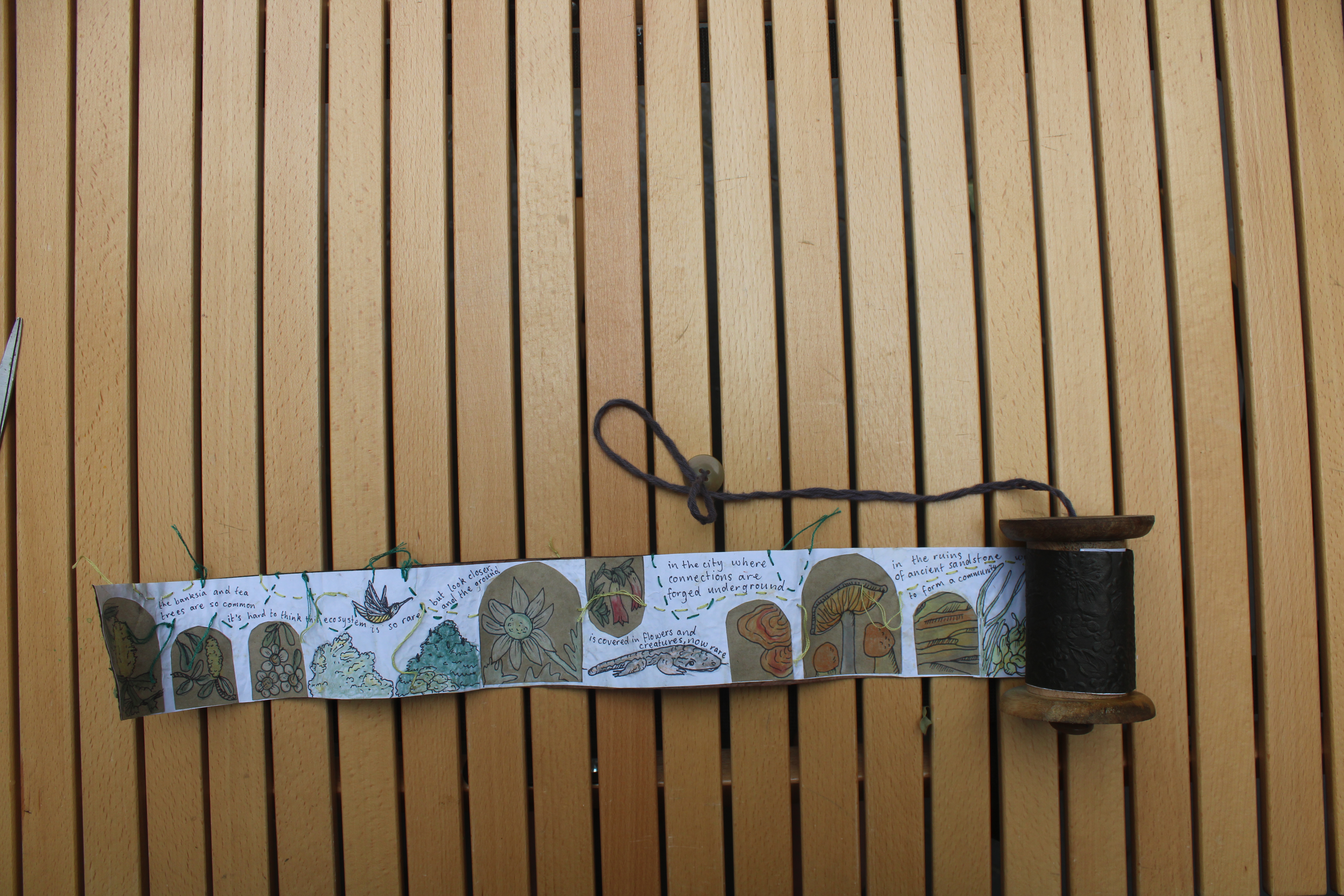
As I enter my third year of writing my second book using foraged and hand crafted inks and collages, I am starting to experiment with different styles of drawing again. This time using old pencils, pen and paper. I am still adamant about my interrogation of the materiality of art making. I have utilised my ongoing reputation as a trash gremlin who will accept all sorts of random knick knacks for arty things.
For this scroll I’ve used the following materials:
- Paper (white and embossed) and a wooden spool from Reverse Garbage
- Pencils my grandparents got me for my 10th birthday
- Embroidery thread my friend did not want any more
- Excess pressed leaves from my book-in-progress
- A pyrography kit a different friend gifted me
- Fine liner pens from lousy ink
Why Banksia Scrub?
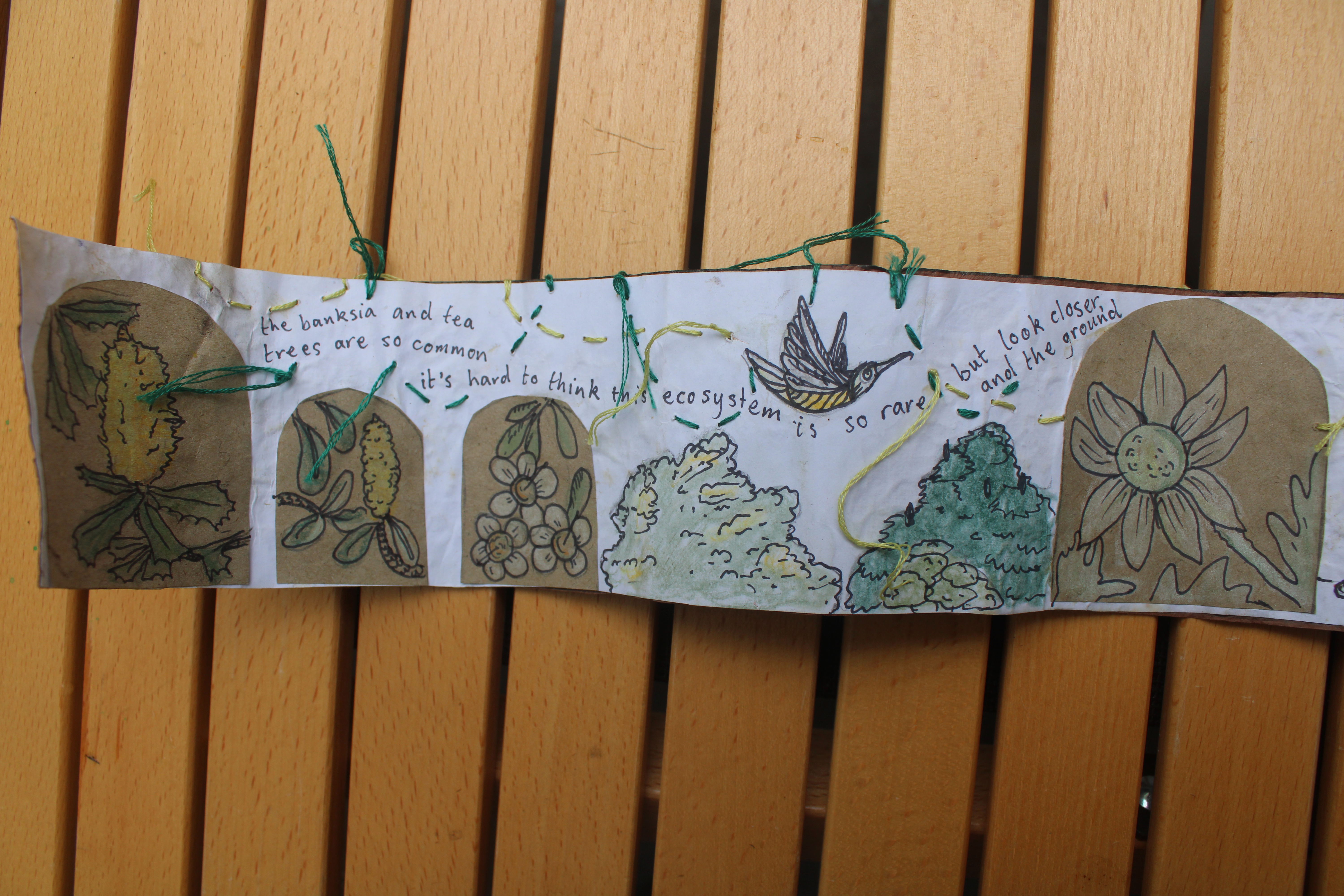
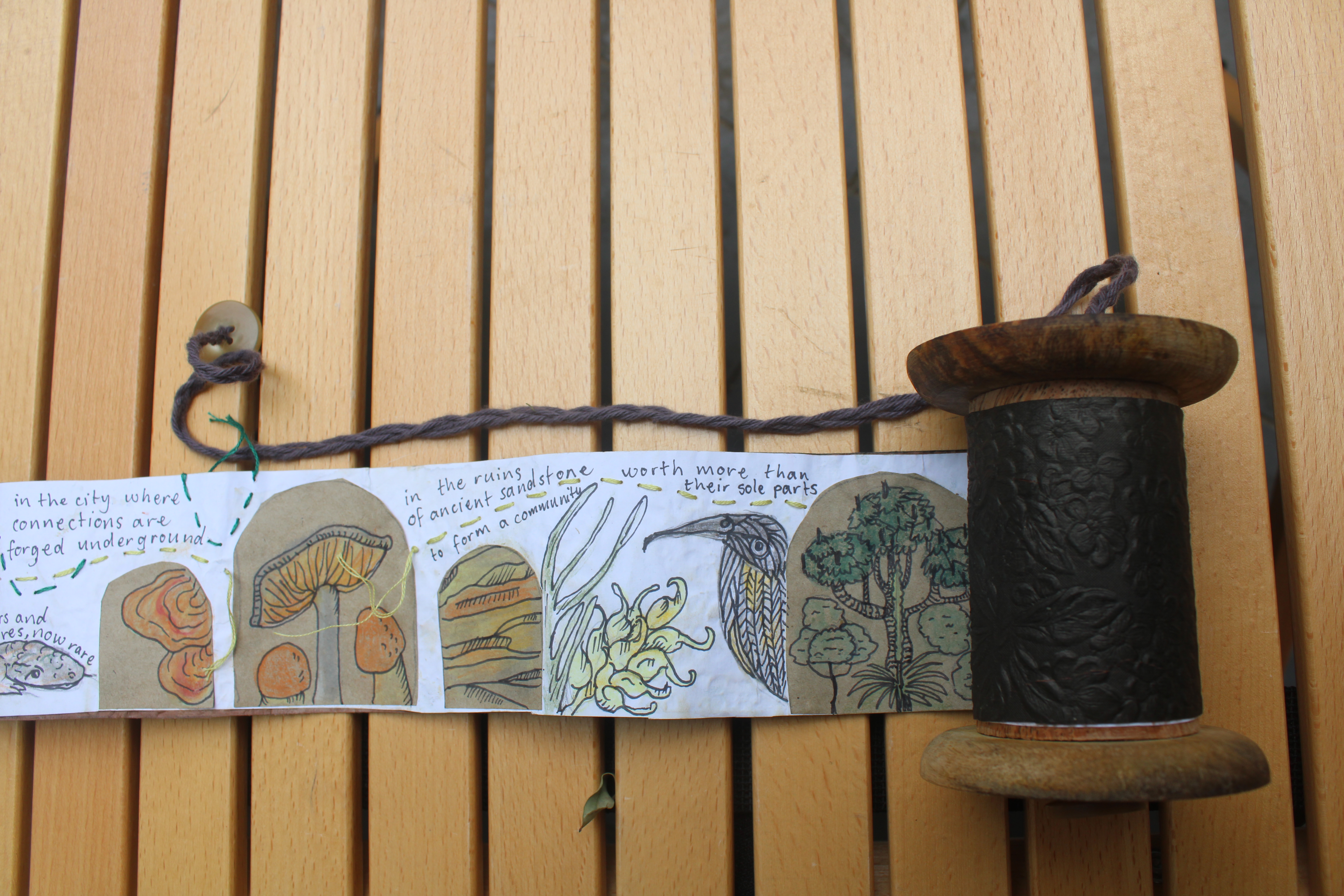
Eastern Suburbs Banksia Scrub is a community that I encounter a lot in my work, as I often work in the small remnant pockets of an ecosystem that once spread across the large sand dunes through the valleys of the swamps of Dharug and Dharawal Country. It is now critically endangered, as these sand dunes and swamps are now known as “Inner City Sydney”. Not good for ground dwelling plants and animals. I wanted to make a scroll that followed the dominant plants that make up the scrub (banksia and coastal tea tree), while showing that it is the community of plants, mycelium and animals that keep these areas alive.
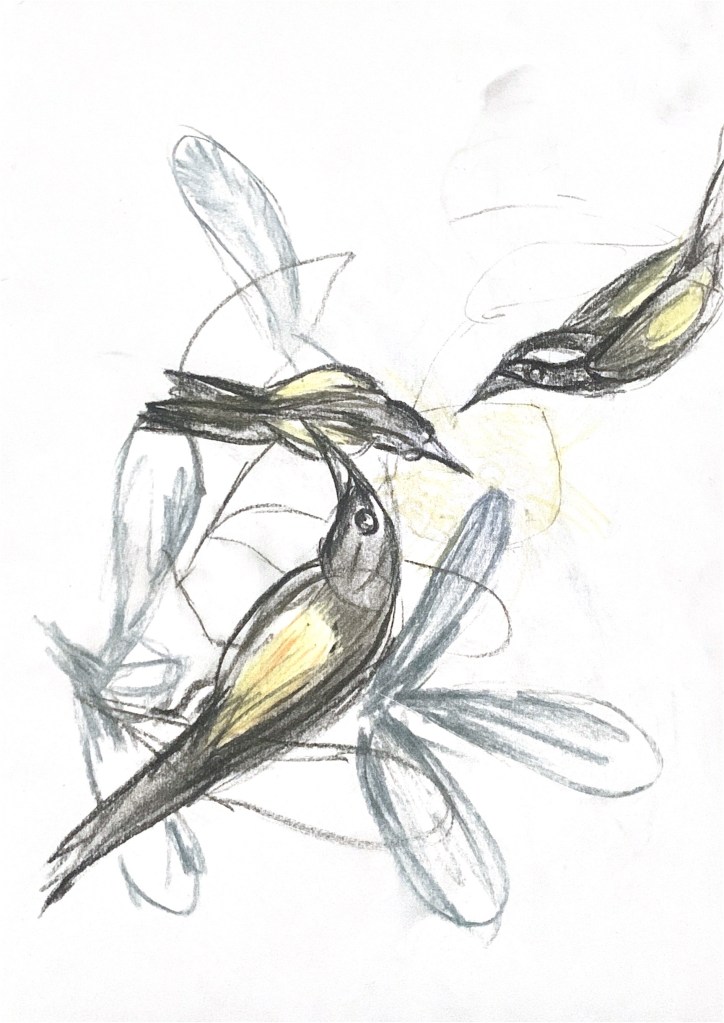
New holland honeyeaters are one of the main pollinators of Eastern Suburbs Banksia Scrub. These are pastel sketches from life that I did on Birrabirrigal Country in 2023.
The process of making
The first thing I did was measure the width of the spool and the cut a strip of paper 1 cm less than that. It ended up being a 7 cm strip of paper. I then measured the length of the paper and marked how much I needed to leave so that the scroll could be secured to the spool.
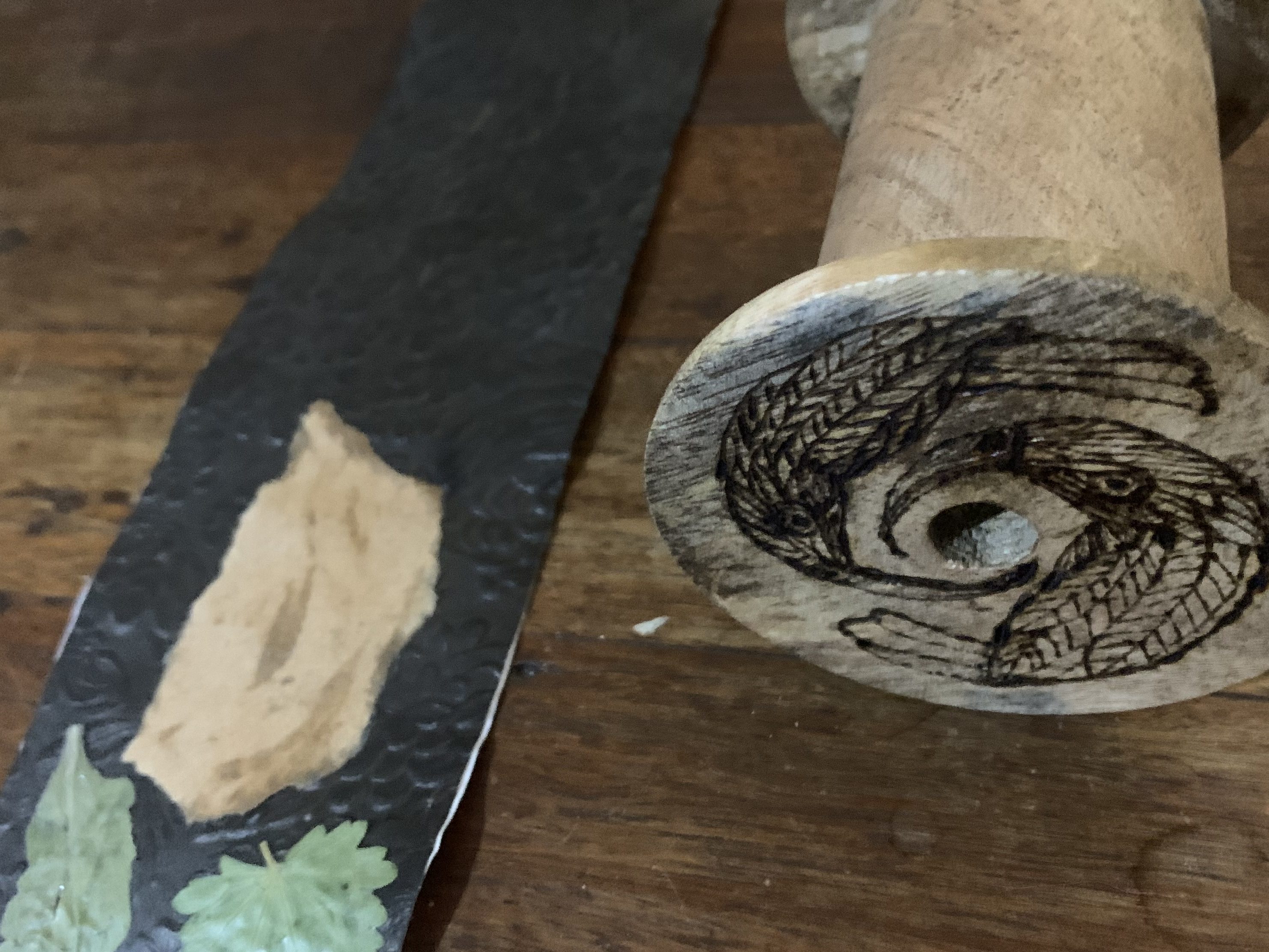
I then used home made wheat paste and a piece of brown scrap paper to create archways along the scroll. I wanted contrast and structure to the base of my scroll so I could play with scale and focus across it. Then I glued down the embossed paper, and waited for it to fully dry before trying to draw on them.
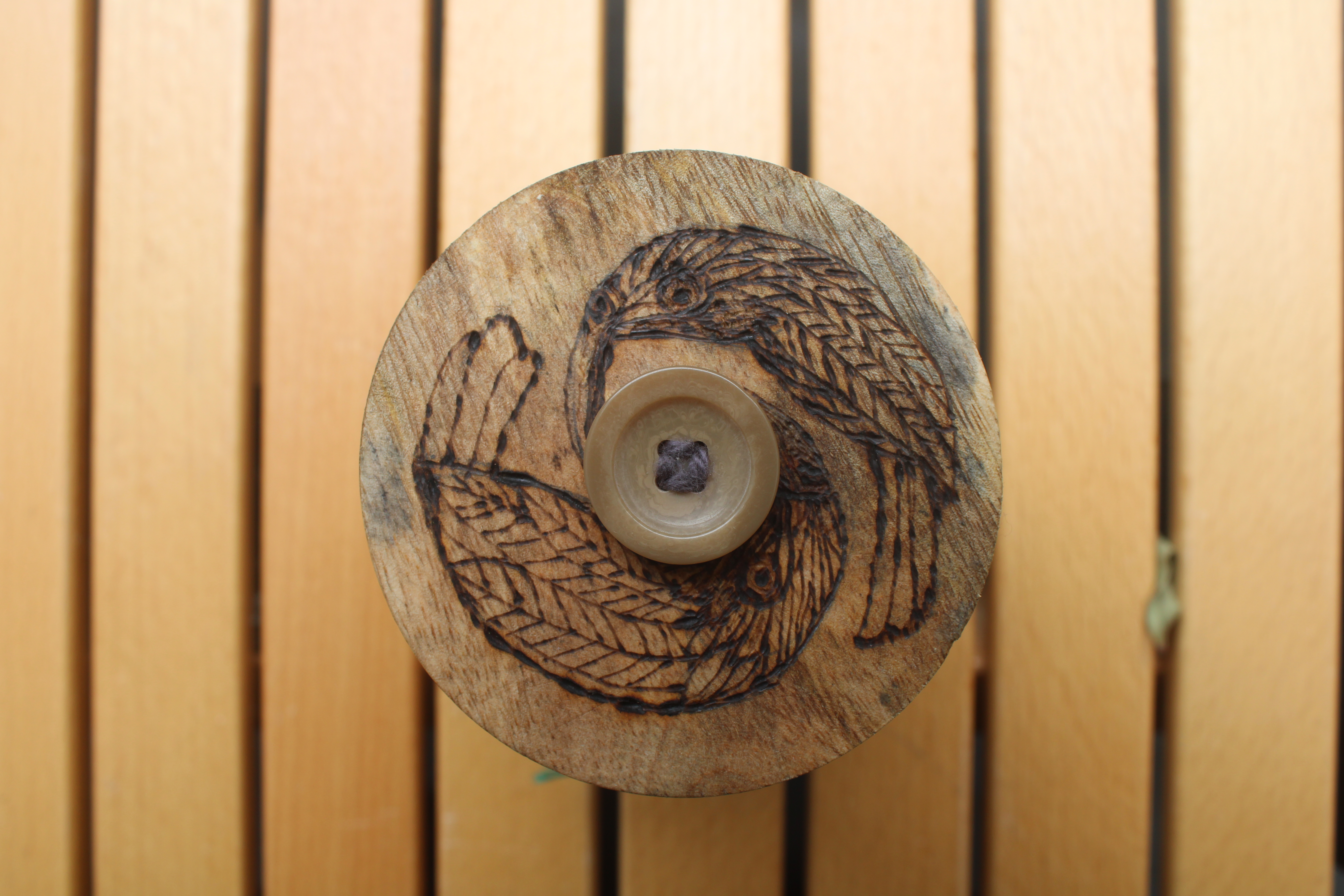
I also burned and carved some new holland honeyeaters into each end of the spool.
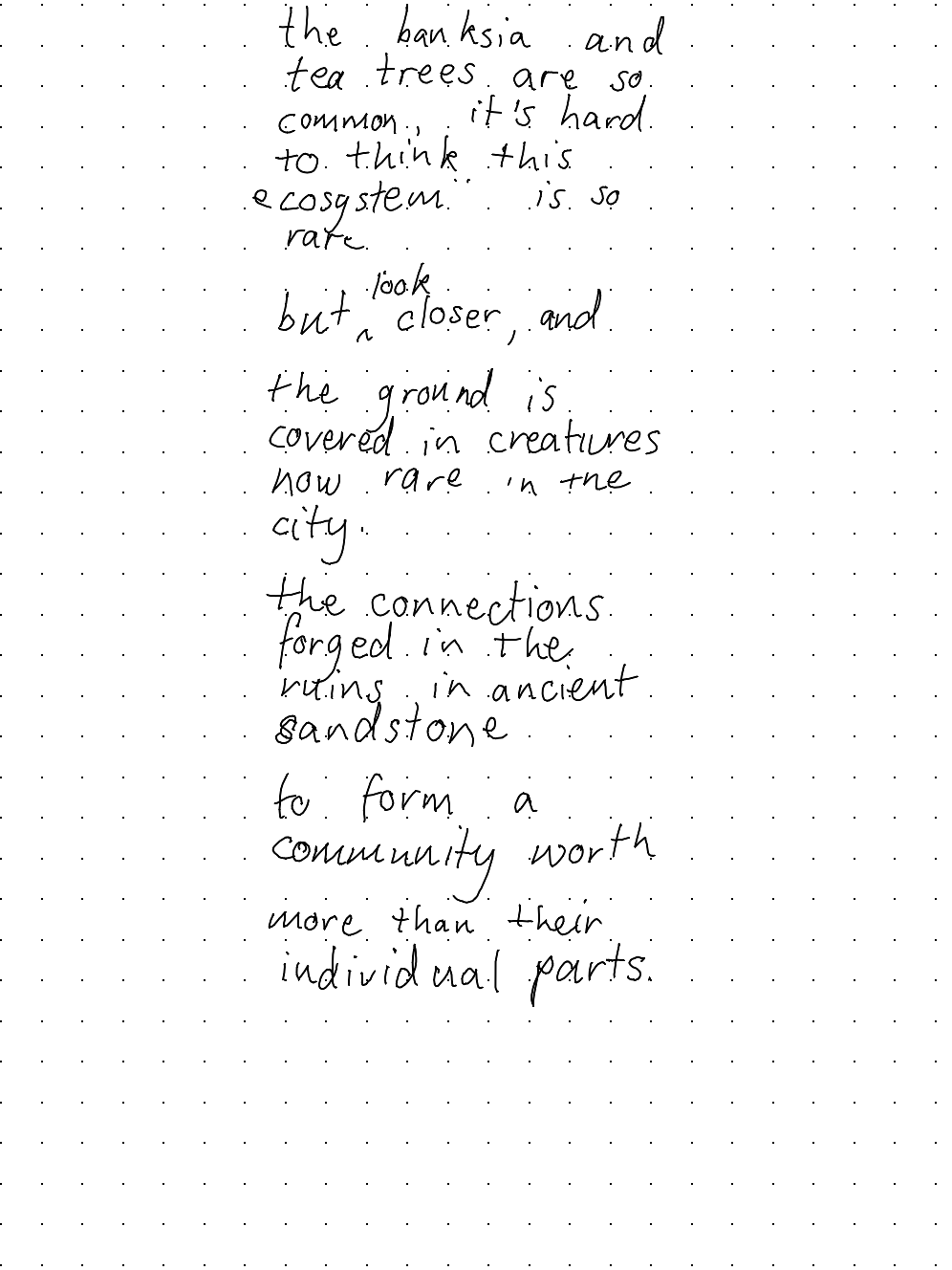
Then I pencilled, steamed and inked in the trees, animals and mushrooms. As I thought about these beings, I began to think about what kinds of words I wanted in the scroll. I settled on reflecting more about the ecopoetics of the scrub as a whole, rather than trying to include scientific names or facts about each individual.
Before my shift at work started, I noted the words below:
The final touches were sewing into the scroll, labelling the outside and making the tie for the scroll.
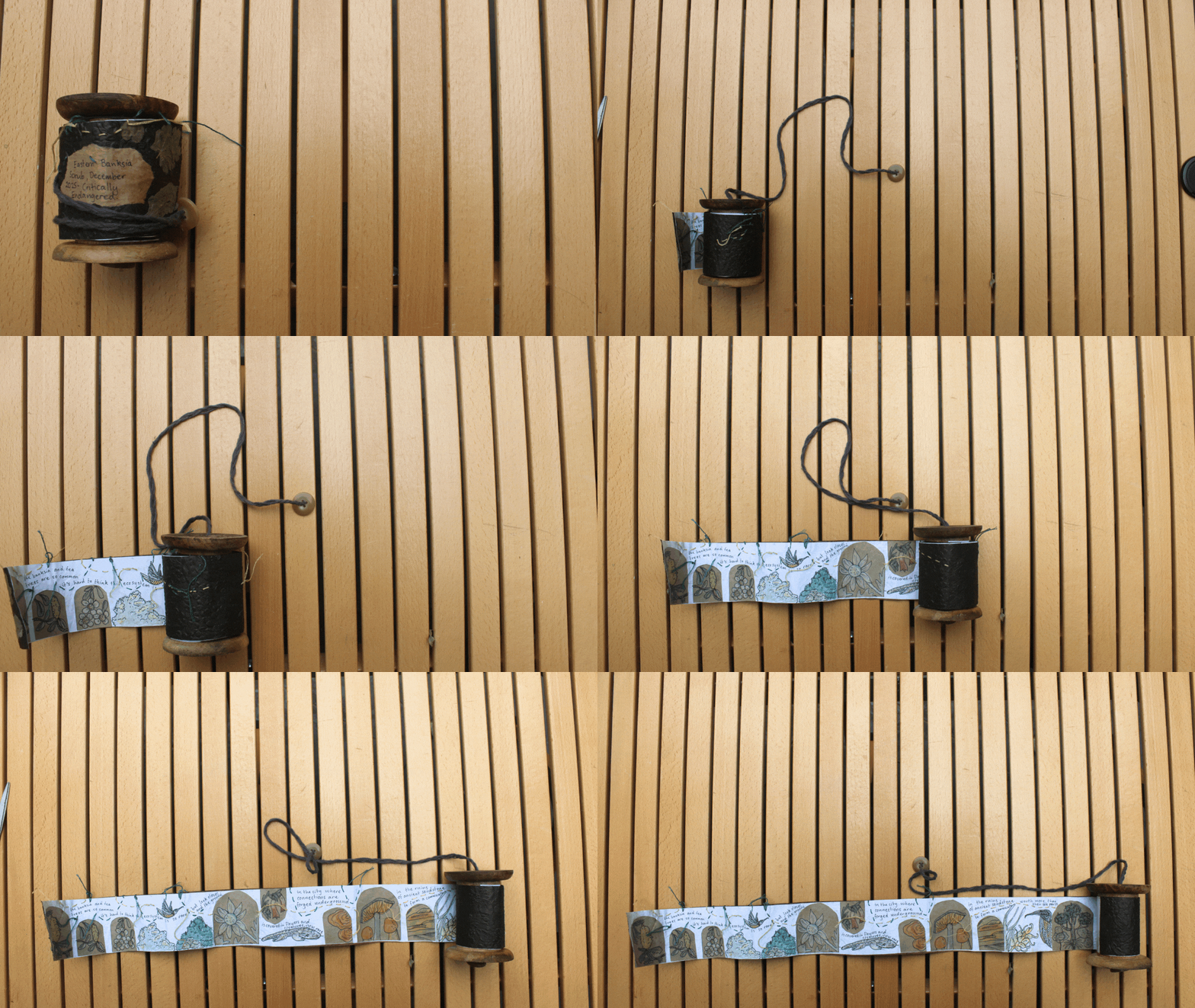
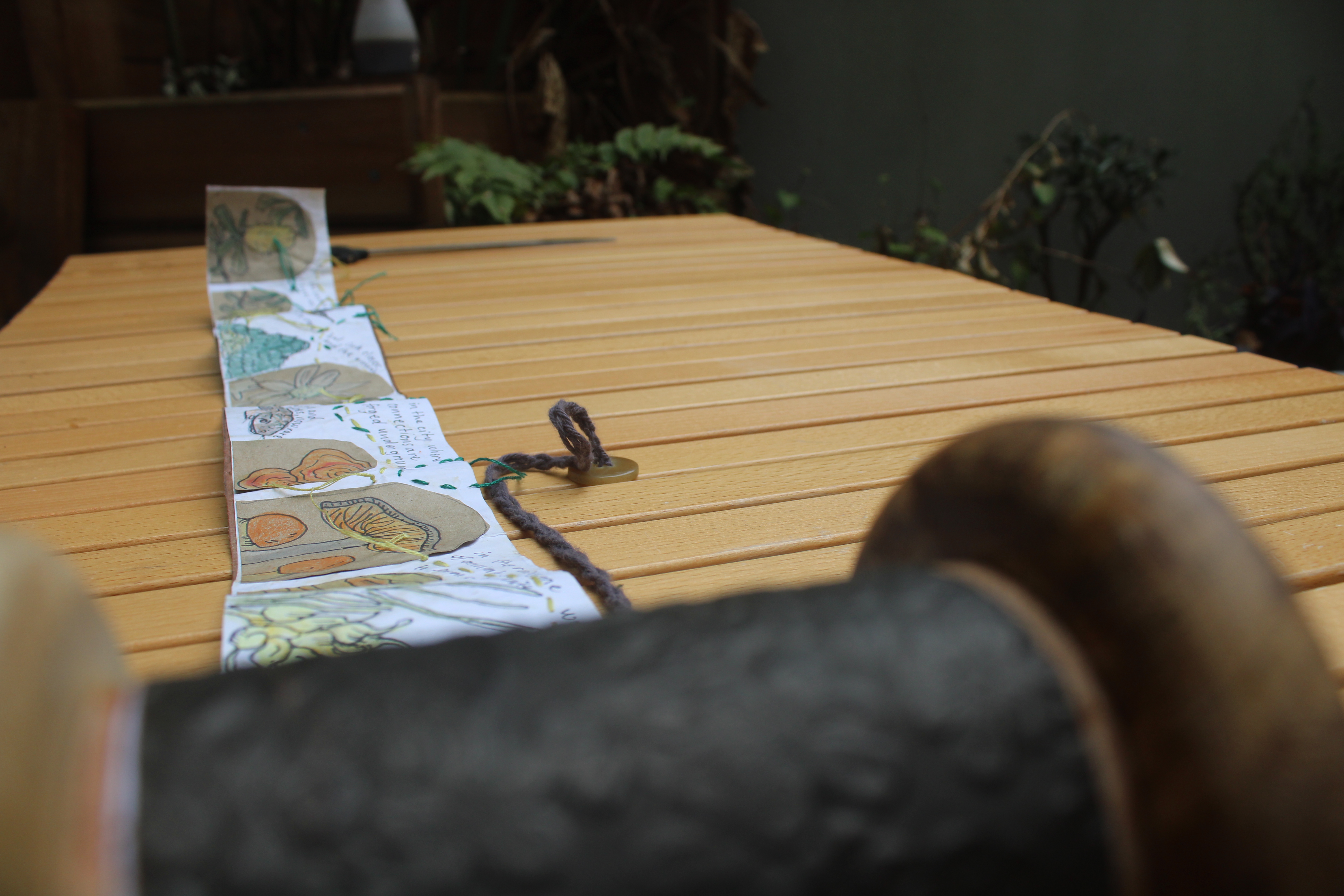
Learnings
- This process reinvigorated my love of crafting. I love working with media that combines sewing, woodworking and visual communication.
- Small objects of whimsy and delight are a beautiful way of fostering engagement with the natural world. Even and especially when ecosystems are critically endangered.
- Never underestimate the value of spending time in nature I did barely any field research for this scroll, because I had so many memories, sketches and experiences already. It was like pulling knowledge out of my back pocket.
This ecosystem is amazing and we should care for it. If you’re in Sydney and want to help, Indigigrow will help you get all the plants and supplies you need.
 Eav Brennan