A reflection on an endangered ecosystem
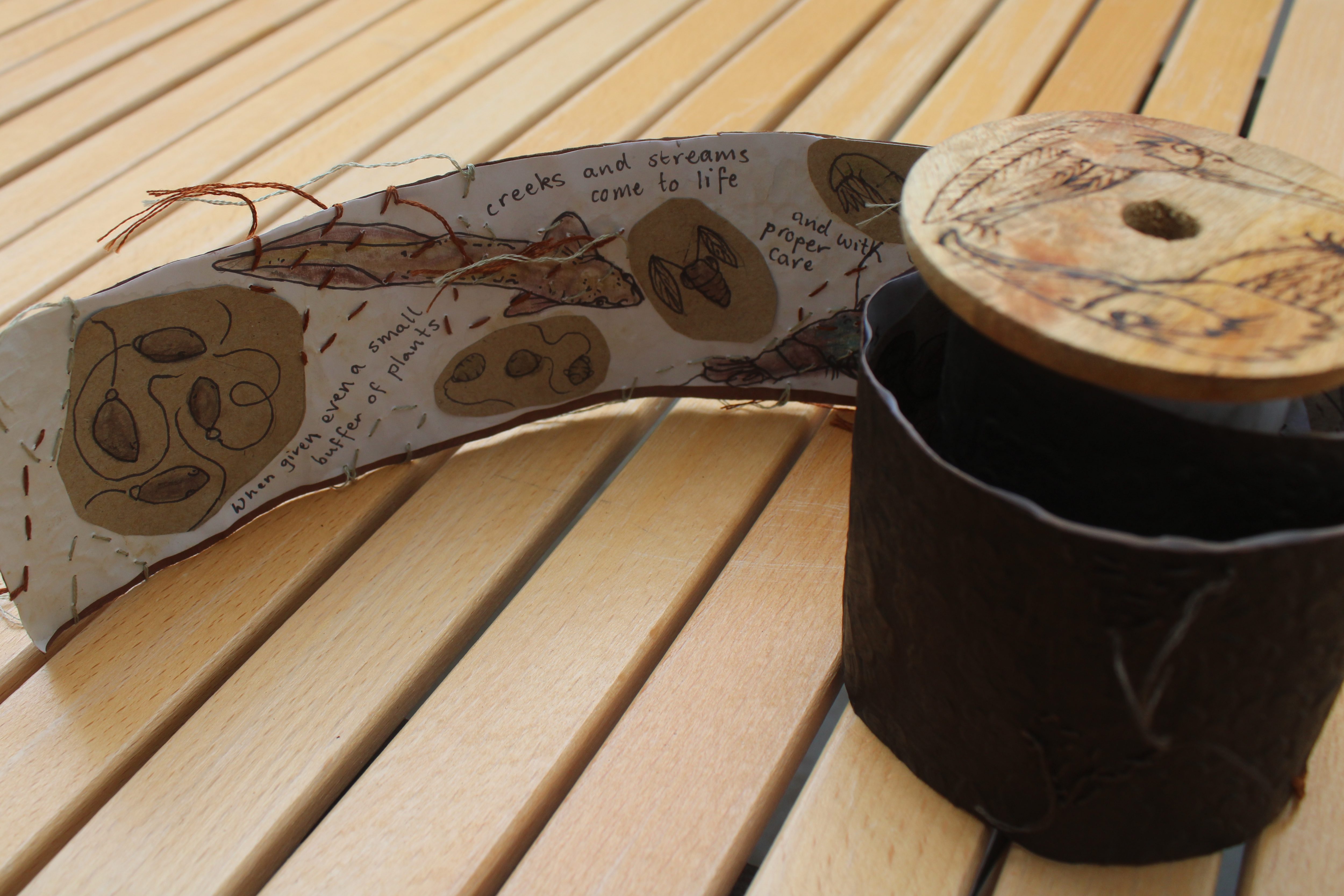
This post is about the ecosystem more than the scroll I’ve made. I used very similar methods to the scroll I made about Eastern Suburbs Banksia scrub. There’s more detail about the crafting and materials in that post. If you would like to explore your local waterways make sure you are respectful of catchment areas (the water we drink) as well as any Laws around if it’s appropriate for you to go to a spot, and how to show respect while you’re there, according to First Nations Elders.
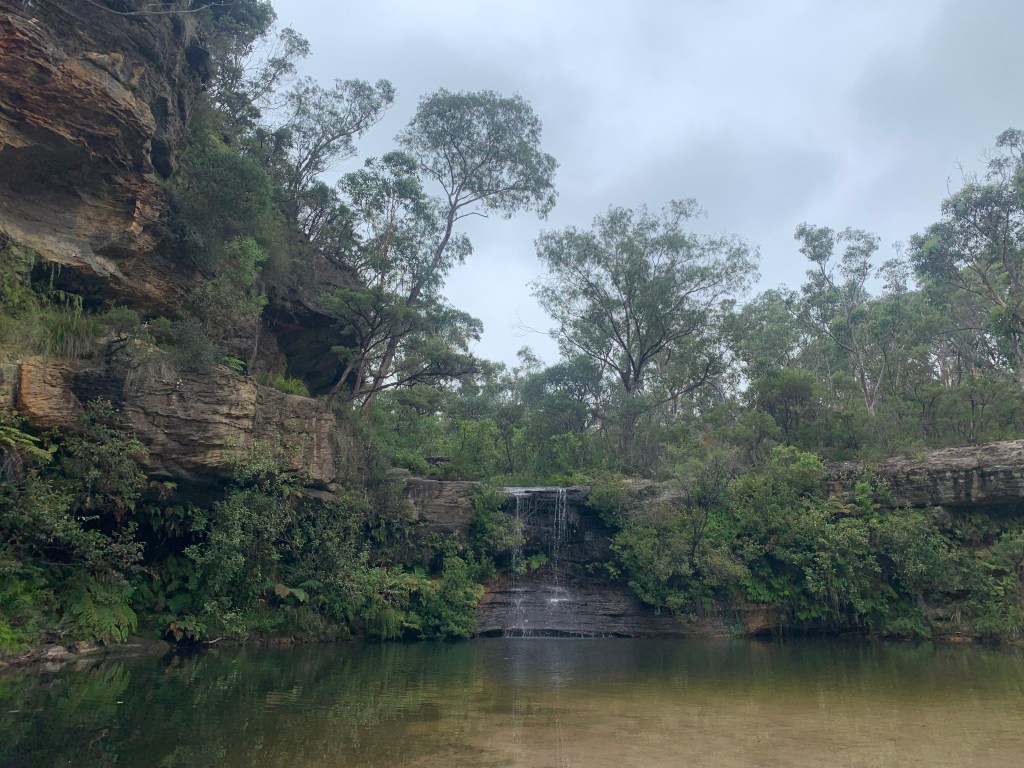
One of my favourite ecological communities to teach people about and take people to are the local freshwater creeks and streams that live in and around Sydney. Our waterways need a lot of care, but they’re more resilient than you might think.
Tank stream was the first river to be polluted by the british on this continent. It runs through the Royal Botanic Gardens in Sydney, and is now a drain made from hand-carved convict sandstone walls. Considering it is a) a drain, and b) subjected to an inner city on its doorstep, one could expect that there would only be mosquito larvae and dead cockroaches in this creek.
But take a closer look, and there are still water bugs and backswimmers, swamp hens, ducks and water dragons who still live along this stream. Eels still live at the mouth where the stream flows into the harbour (although they are always accompanied by a fair few feral carp). Freshwater creeks and streams are more hardy than we give them credit.
Streamwatch and River Keepers
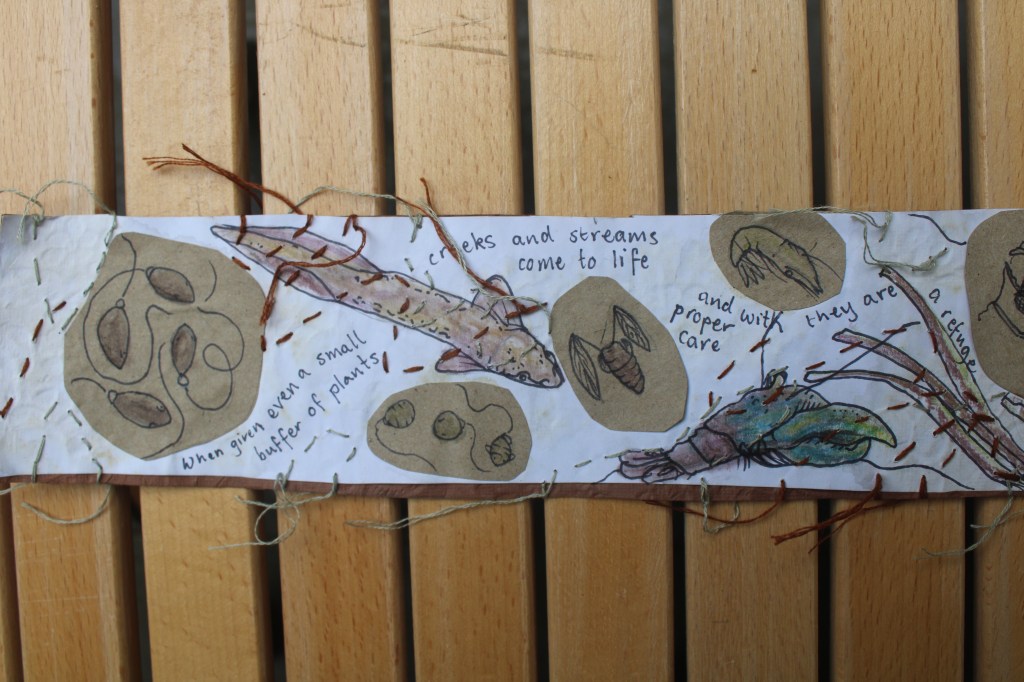
Observing the animals who live in freshwater streams is a good way to assess overall river health. Certain animals can only tolerate pristine or very low levels of pollution, and so when you find them, they show that the river is healthy and cared for.
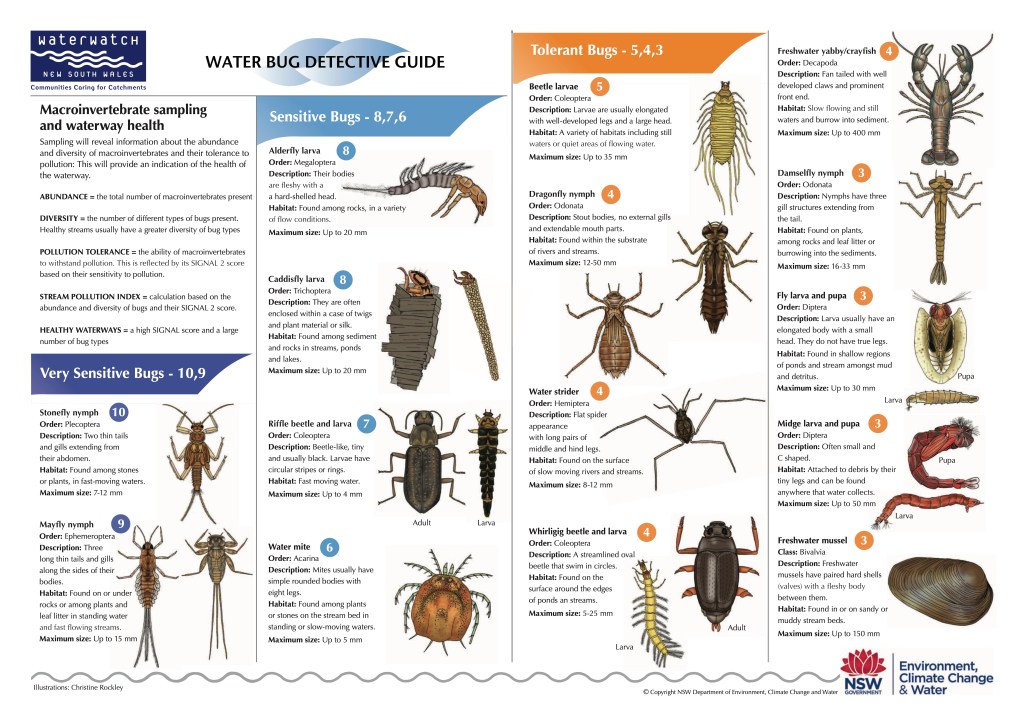
Even in suburbs like Manly Dam, Kuring-gai and Heathcote, there are still creeks with Spiny Crayfish, a fair few nymphs and freshwater prawns. I remember how special it felt to catch my first stonefly nymph just an 8 minute ride from Waterfall station. When there is a buffer of native plants and bushland that is cared for, river health has a marked increase. Not just in who lives in the creek, but the creek’s physical and chemical properties – like turbidity and pH.
Which is why doing bush care along waterways is an excellent way to care for environmental and human health. In Sydney we have Riverkeeper Programs where you can volunteer to care for your local rivers and streams.
Restoring River Health
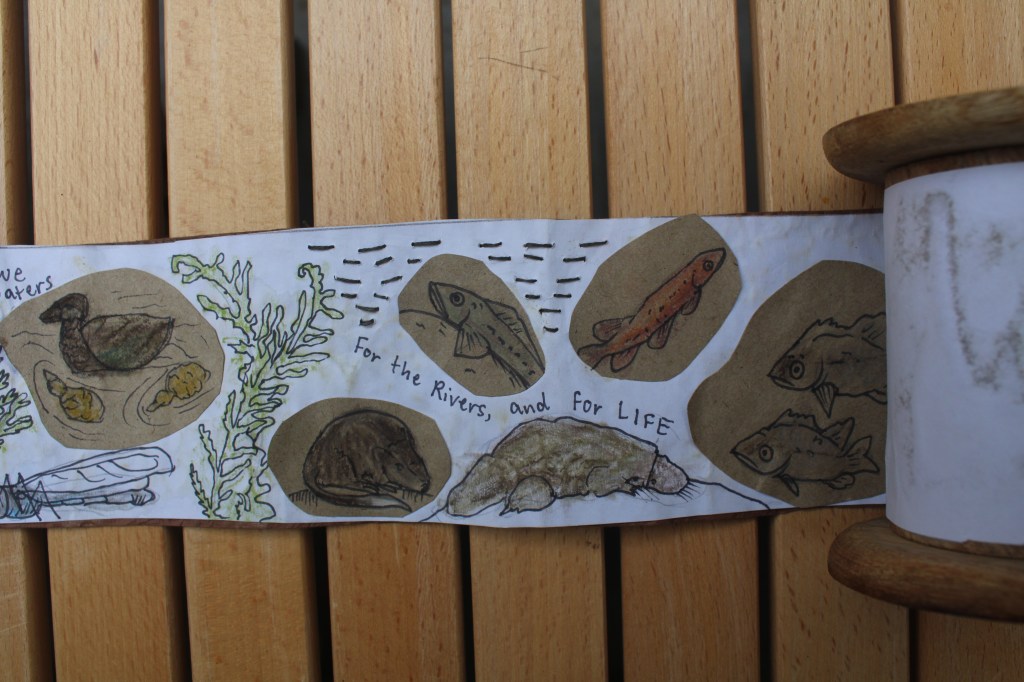
The last part of my scroll was a reflection on what could be, with the restoration and reintroduction of creeks with mammals (Rakali and Platypus) and larger and more diverse freshwater fish. On Aboriginal Land, this is not rewilding because these Rivers have been managed and cared for since past ice ages – they have never been wild.
Nonetheless I wanted to include it as working with larger animals is a critical (and radical) step in River care. To me, the reintroduction of Platypus into the Royal National Park on Dharawal Country is awesome and exciting. The prospect of coexistence with Rakali and Platypus in sub-urban and urban ecosystems would require an enormous amount of care and effort for the waterways and bushlands around us, but other urban areas around Australia still manage it.
Working with plants and animals, as well as communities to care for waterways is a wonderful way to care for ourselves.
 Eav Brennan