A crafty format for blending abstraction and observation
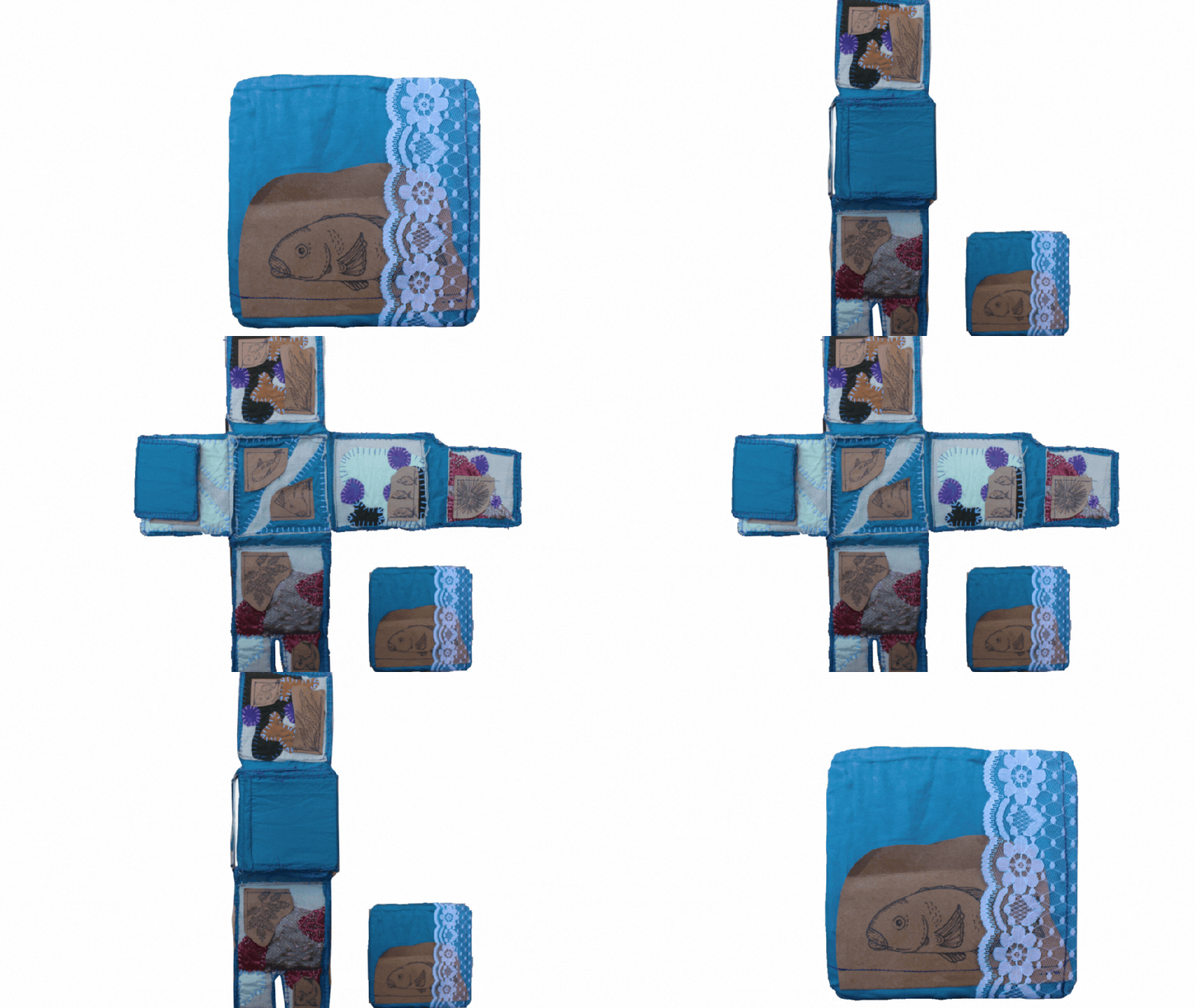
I made this sewn artist book as a way of processing the forms, shapes, colours, textures and individuals who inhabit the bay at Clovelly on Bidjigal and Gadigal Country. I am making a story about a Blue Grouper in my book, and wanted to be able to commit the place to may own imagination. So I made a little emergent map of the different seascapes that inhabit the bay.
Materials
For this project, I used the leftover fabric from my 2023/2024 community-crafted tapestry about the Great Southern Reef (of which Clovelly is a part).
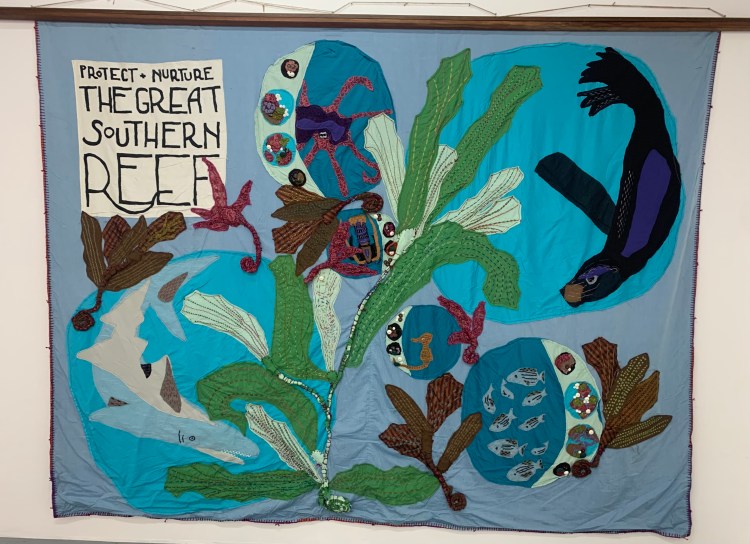
The fabric is reclaimed, from either Reverse Garbage or The Fabric Store.
I also used:
- My Lousy Ink fine liner
- Paper bags and cardboard
- My hand-crank sewing machine
- Various blue and pink threads
- Some old lampshade structuring
- A small, square tin
Colours, shapes and textures
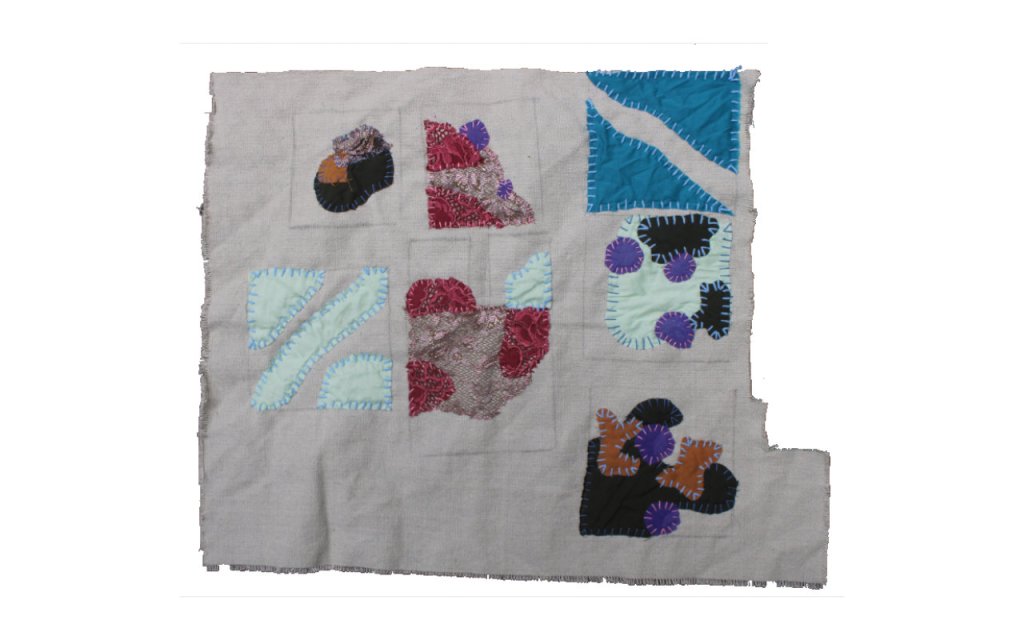
Initially, I set my limitations of my design by cutting the cardboard and lampshade structuring into 9 small squares, each to explore a different seaform of the shallows.
I allowed these to emerge in my memory as I worked, remembering the long, thin rocks where the bream sleep under the buoy at the deeps.
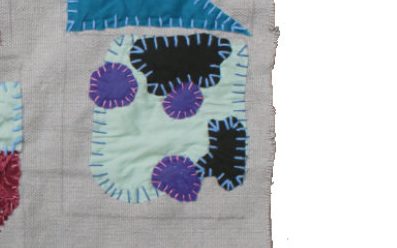
I thought about the bed of sand that lines the entrance to the bay from the drop off that I have always been afraid of as it is good shark habitat.
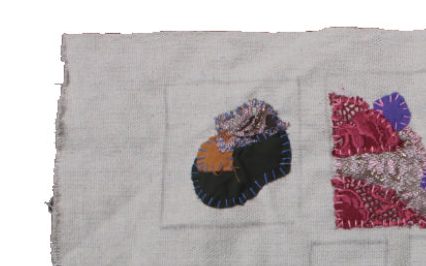
While rocks loom out of the depths, surrounded by fish and covered in plants.
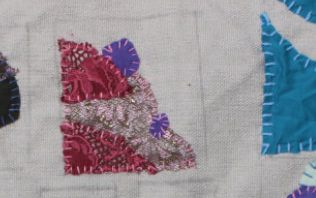
From there, in my imagination, I swim round to the shallow rocks covered in seaweeds and up onto the reef on the north eastern edge of the bay. Urchins and pink and purple corals form a carpet.
All through this place, the Blue Grouper can emerge at any time, asking me to flip a rock to eat what’s underneath.
In a whirl of colours and shapes, I can recreate the feeling of swimming in the bay with the Grouper as a memory in my body.
Form and structure
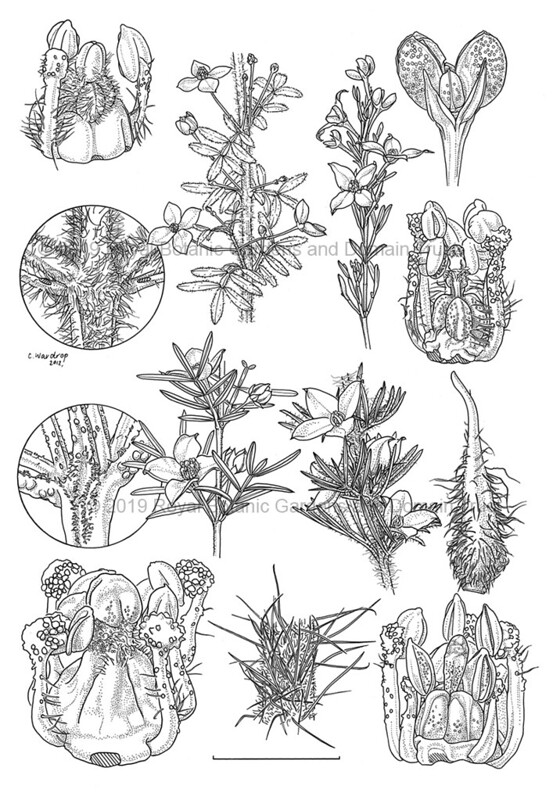
When doing character design, it’s not enough to embody the feeling of swimming through the place, it has to be interpretable and understood by a viewer. So for this project I chose to do line and stipple drawings of key individuals I encounter as I swim.
Line and stipple drawing is still employed by scientific illustrators to create reproducible and interpretable images of the anatomy of life. It is incredibly detailed and structured. Although it’s definitely not my forte, I like practicing this style of drawing to study the details of the bodies of the fish, corals, algae and invertebrates that I will eventually draw in the style of my book.
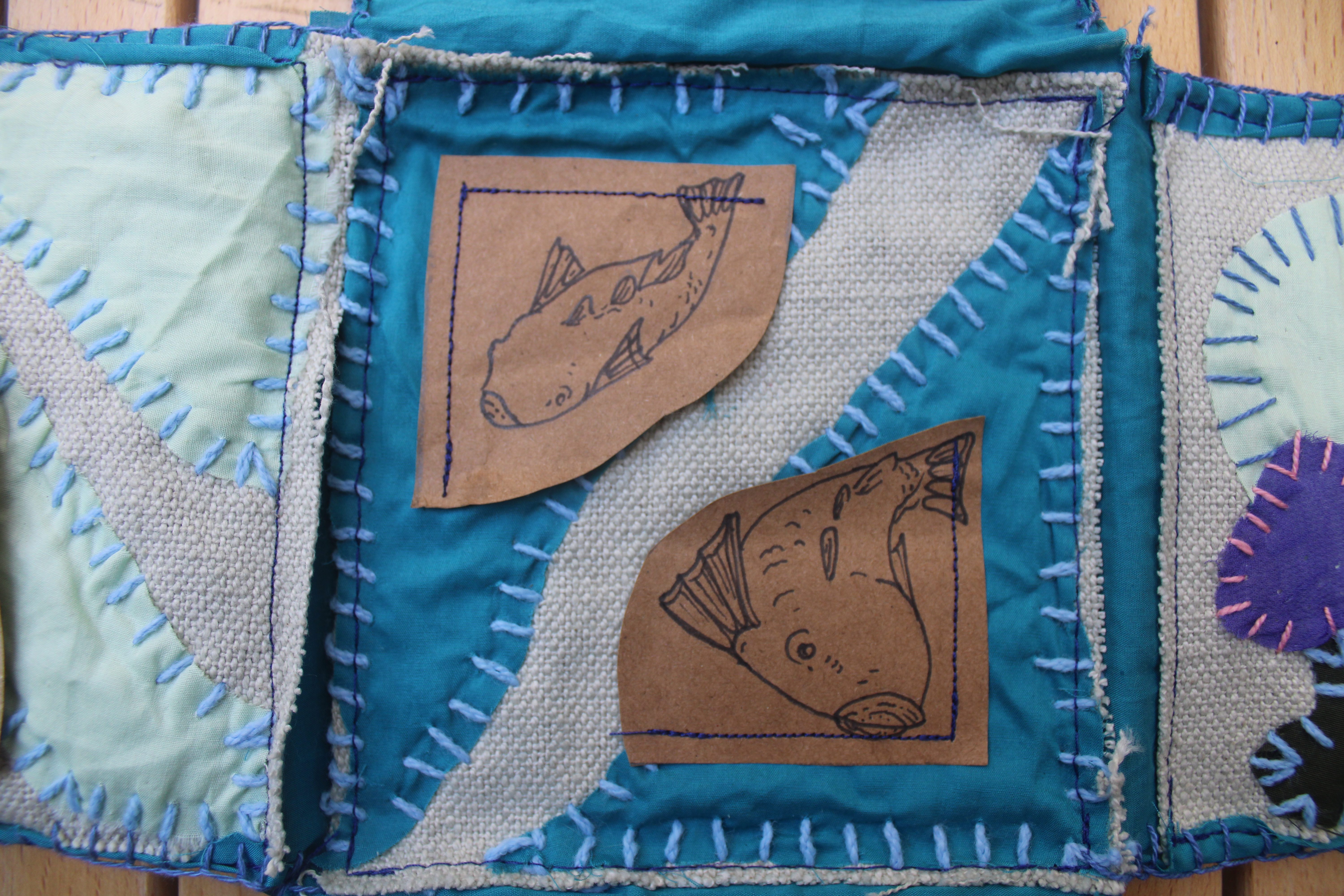
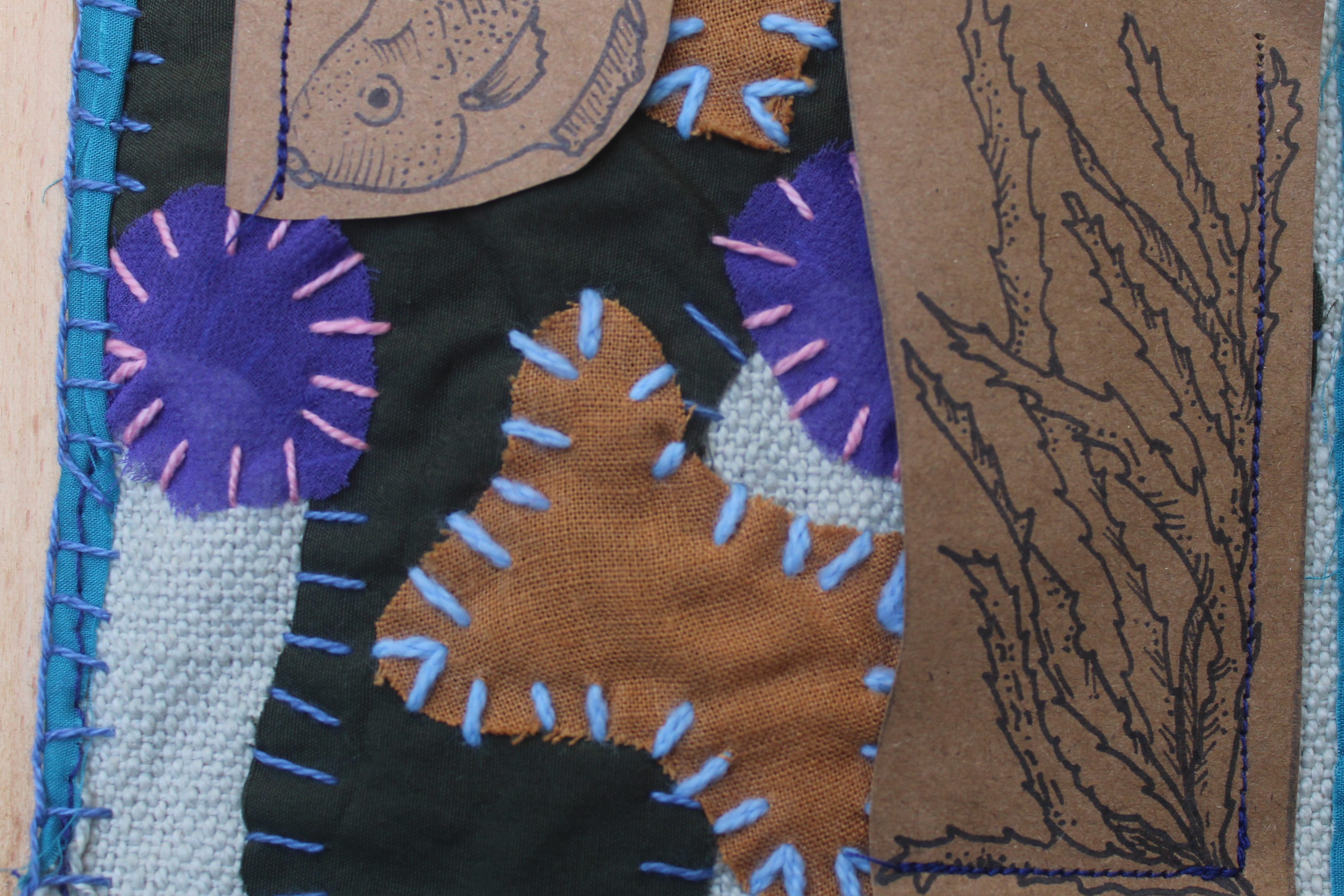
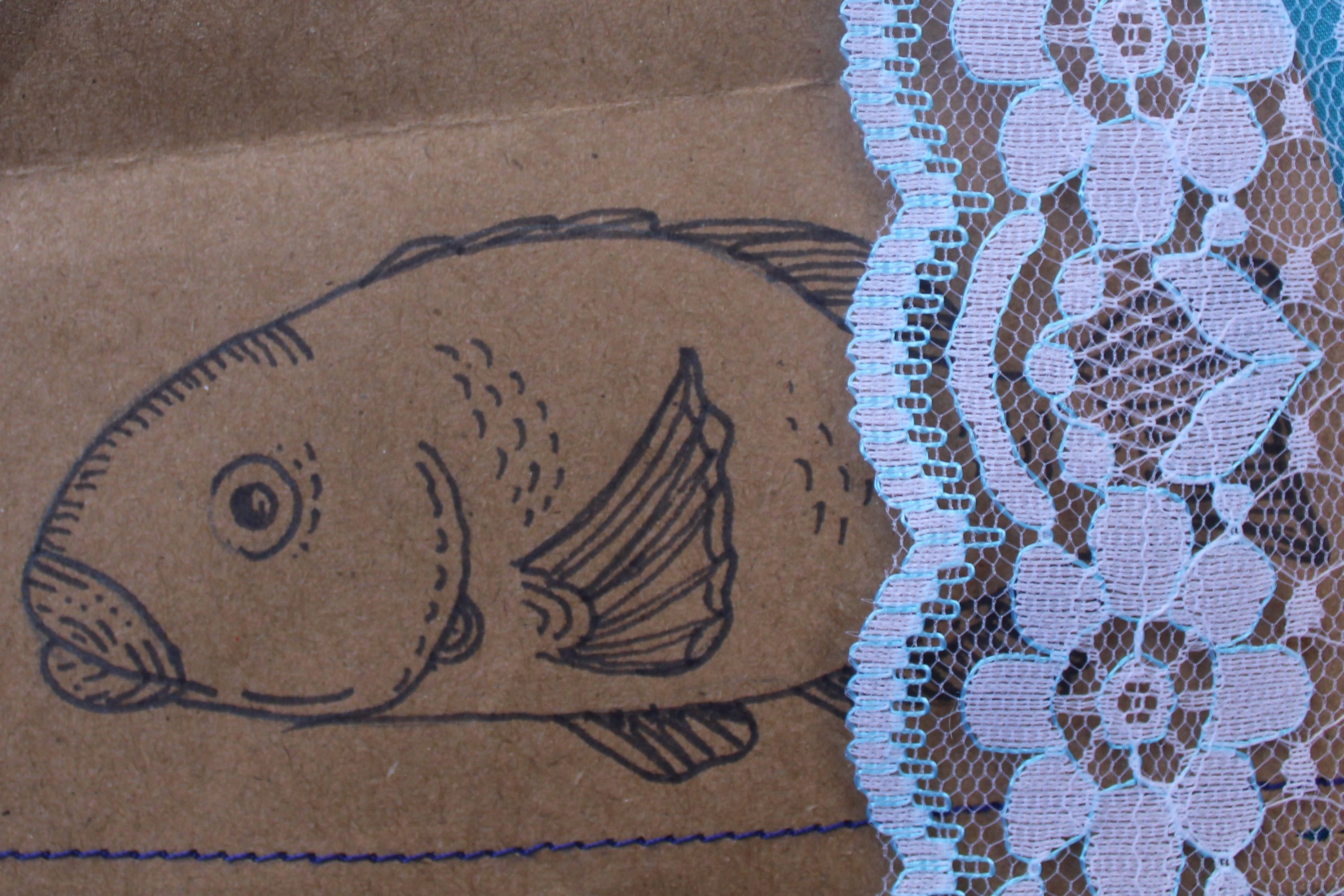
I sewed line and stipple drawings of these creatures into the spots where I often find them.
Uncovering blennies in rockpools
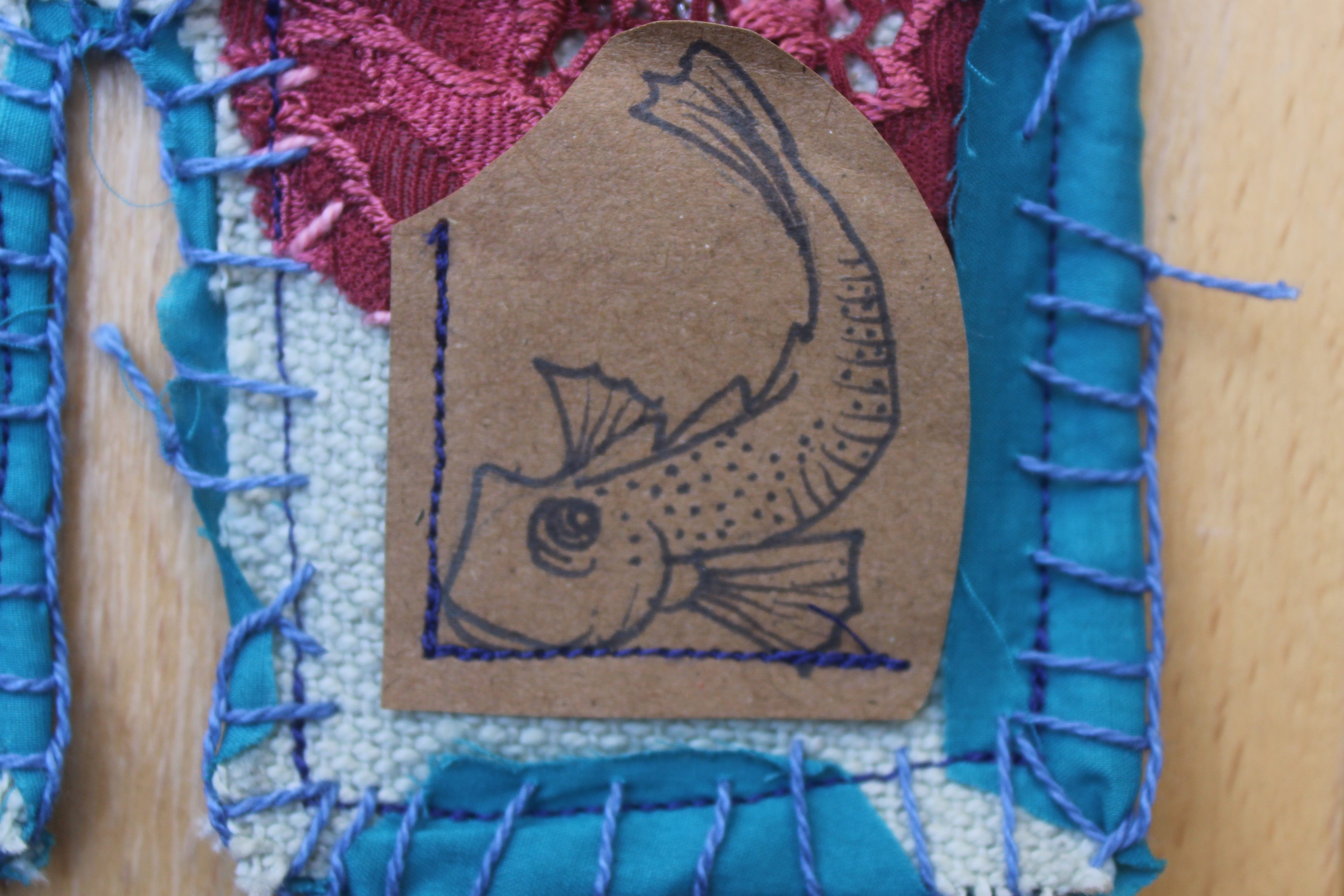
For my final line and stipple drawing, I was wanting a shallow water animal, preferably a fish, but my mind was coming up blank. So I ventured out into the field – this time in the rock pool on the northern end of Coogee, as the water at Clovelly was too murky, which is a habitat best left for sharks to do their thing.
This rock pool is only 1 m deep, and is sheltered from the rest of the reef by some crumbling boulders. Wading out, I was initially disappointed, seeing plenty of damselfish and pufferfish, but no-one that was standing out to me as who I wanted to draw.
This is where I love fieldwork, and specifically naturalist drawing. The key to noticing and encountering exciting creatures is to slow down, and if you’re lucky, they will make themselves known to you. The local blennies – some rock clinging triple fins – had been hiding themselves among the carpet of algae and coral along the rocks. Upon sitting still in the water with my mask on, only moving to surface and breathe, they began to make themselves known.
In time, the algae and corals’ movements of gushing with the waves and slow drifts in between sets began to be interrupted with shimmering flicks and darts. Following the disturbances, I found the seemingly fish-free rocks spotted with blennies. They were camouflaged each in their own unique pattern. I saw sizes ranging from tiny 3 cm long juveniles with nearly transparent bodies, to 15 cm adults covered in pinks, purples and browns with golden spots scattered across their scales.
These where the fish I chose to focus on for a small but very memorable drawing in a corner of my work.
Learnings
- I like making objects that emerge, starting small and then expanding outwards. Although I wasn’t overjoyed with this iteration, I am looking forward to making further designs and objects that fold from a central point as a key feature.
- Sitting still in the right spot can allow other Earthly beings to show you their world, what a privilege it is to slow down among fish!
- Using fabric for abstraction and then sewing in paper which I had drawn on in detail was an interesting and pleasing experiment.
 Eav Brennan