I have a new toy and have been making some paper crafts with it.
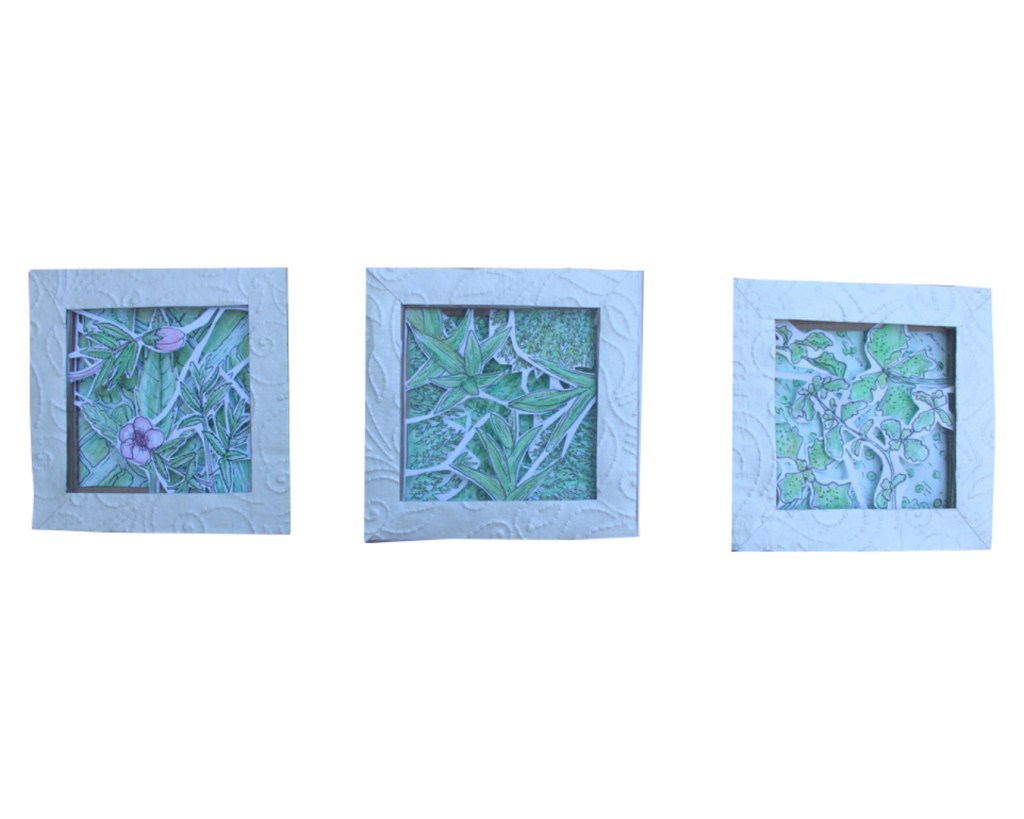
Recently I got a new microscopic camera that goes up to 19x zoom from Australian Entomological Supplies and I have been obsessed with the plants in my garden (not a new thing, but the microscope has made a new perspective on it).
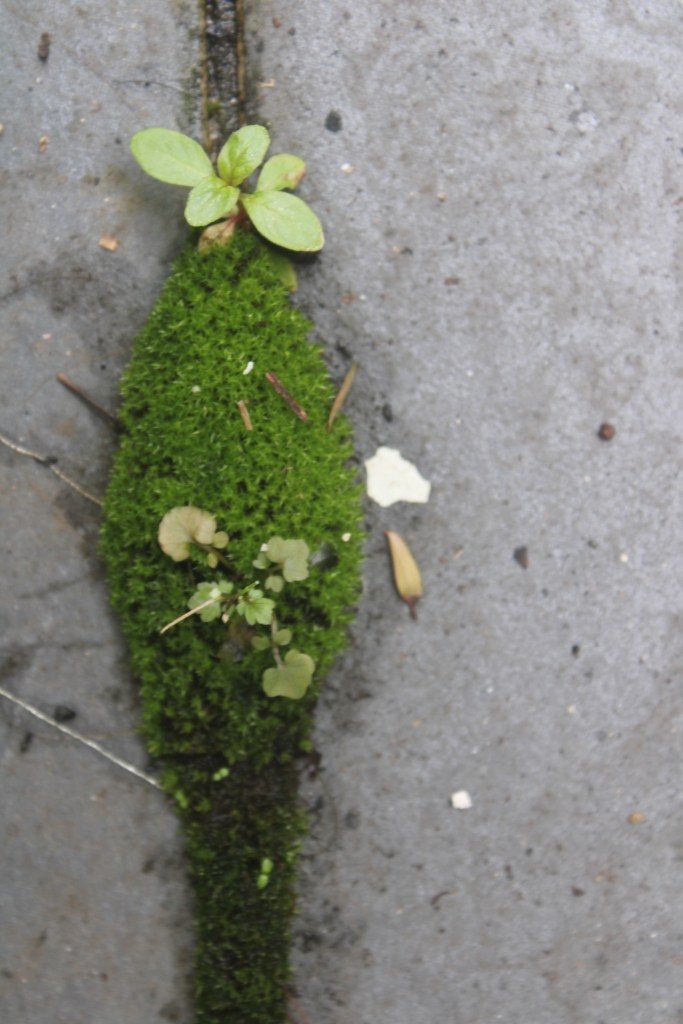

Looking beyond what I can see, I have loved finding the tiny bugs who are building their homes in my inner city courtyard, but I have always enjoyed microscopes for their usefulness in understanding how energy and water flows through plants.
At work, we use field microscopes to see the stomata on various leaves: The small circular cells that open and close for gas exchange. Using such zoom that you can see individual cells on vascular plants means that the canals of xylem and phloem, the small hairs and oil glands on leaves, the serrated edges, or smooth and tissue filled leaves become clear. Leaves stop being just ‘leaves’ and you start to see how the individual plants have their own structures and forms.
We also use hand lenses. Hand lenses are good to focus on key details of a plant. I love to look at the emergence of young leaves through a hand lens. By focussing on the new growth, I see the patterns of how the leaves arrange themselves, how the leaves morph and shift as they age.
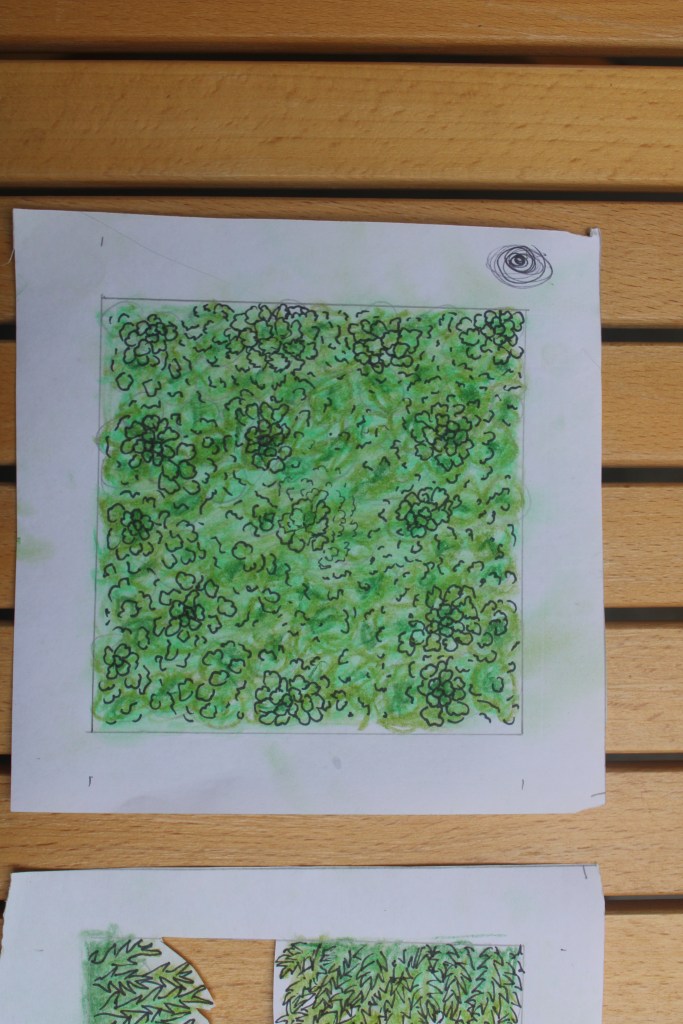
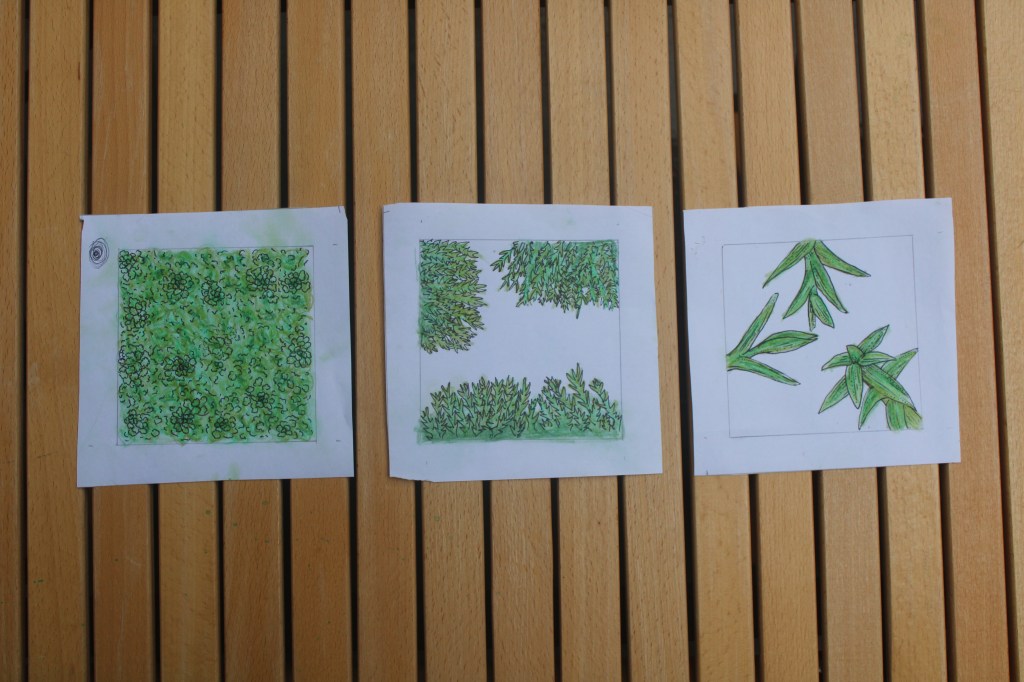
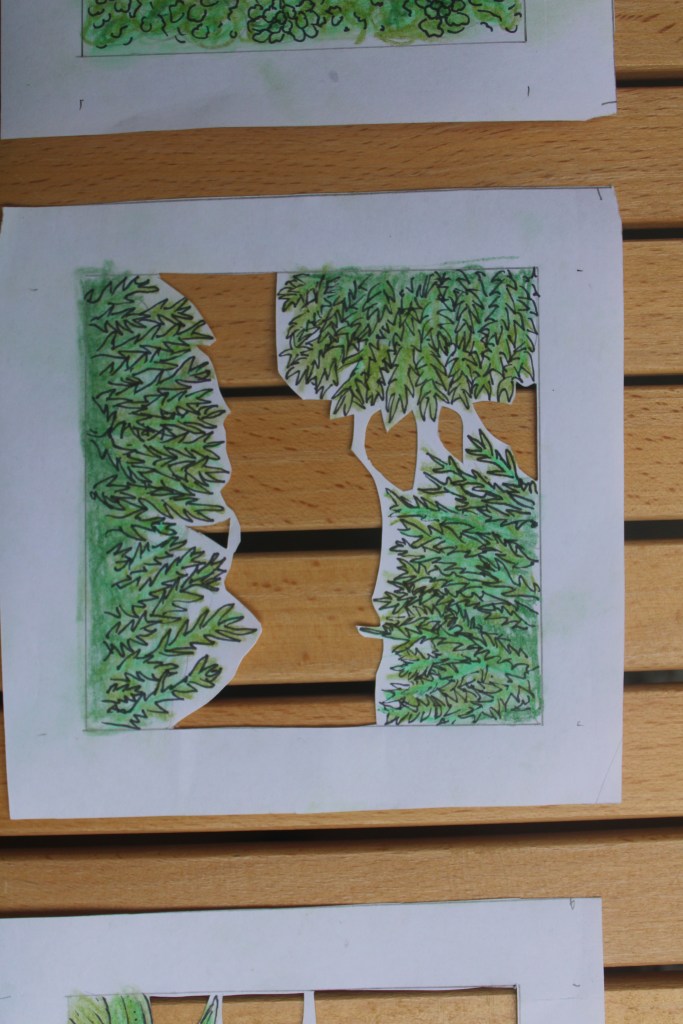
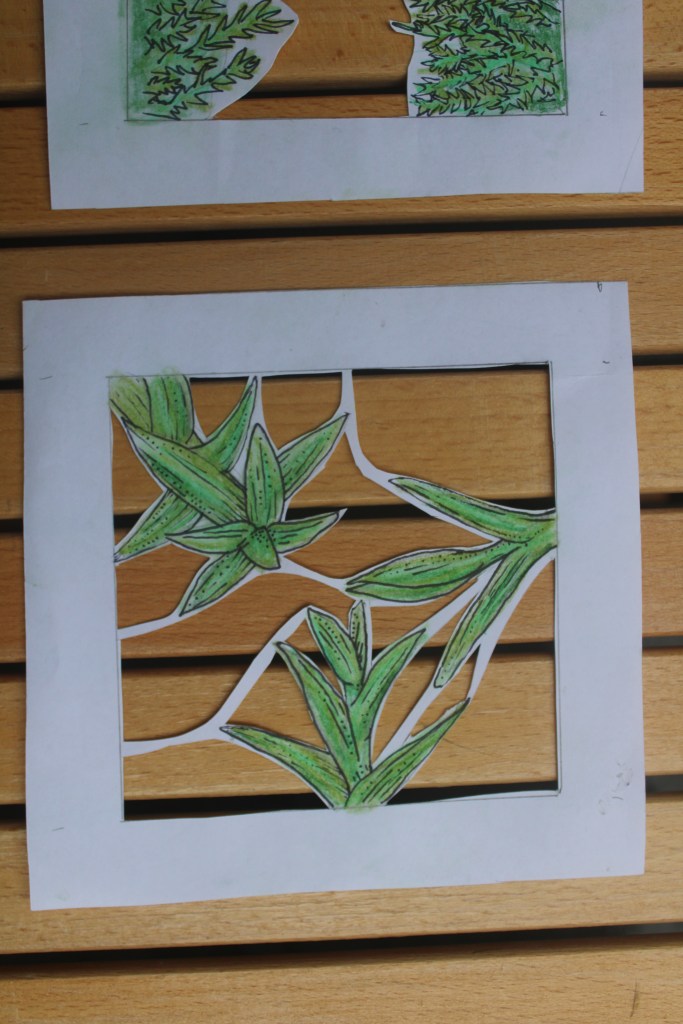
I wanted to make a series of artworks that create an emergent sense of scale. I chose to do a series of paper layering crafts with the most abstract forms at the back and the most detailed forms at the front so that the scales of a single plant looks as if it’s a window into a whole world. For native mint and rosella, that means the background is the microscopic view. For moss, the foundation is the furry green textures I see with my naked eyes.
I chose to document the creation of my moss work because I am currently listening to Gathering Moss by Robin Wall Kimmerer. I particularly loved the following quotes, because they remind me of looking for blennies and how I look at my garden. The first quote is in the context of looking for starfish, but I experience this a lot when looking for small, still creatures.
I straightened up from the pools to relieve the growing stiffness in my back, and suddenly I saw one… And then it was as if a curtain had been pulled away and I saw them everywhere. Gathering Moss p.9
I always think of it as waiting for the beings to choose to be seen. When they think you’re ready, they’ll reveal themselves. They pull back the curtain.
In this chapter Learning to See Kimmerer also has a beautiful observation of what we can learn from sitting with mosses.
Mosses and other small beings issue an invitation to dwell for a time right at the limits of ordinary perception. All it requires of us is attentiveness. Gathering Moss p.10
So this is how I made my moss paper craft.
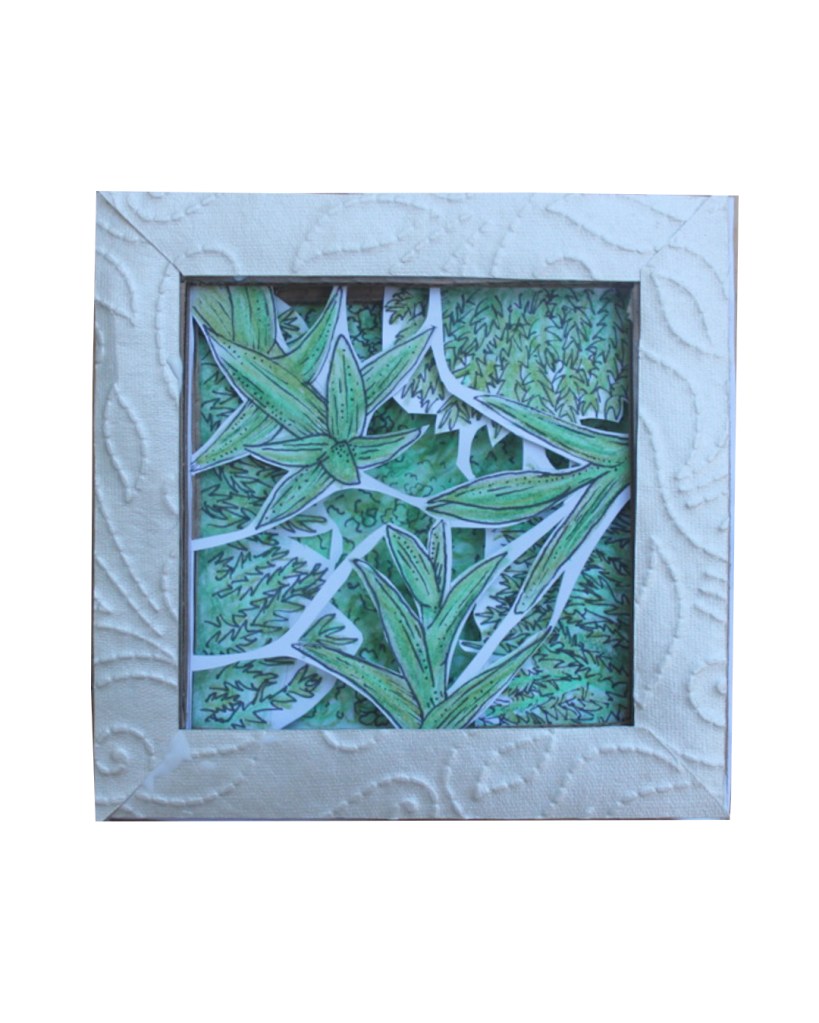
Materials
For this project, I used the following materials:
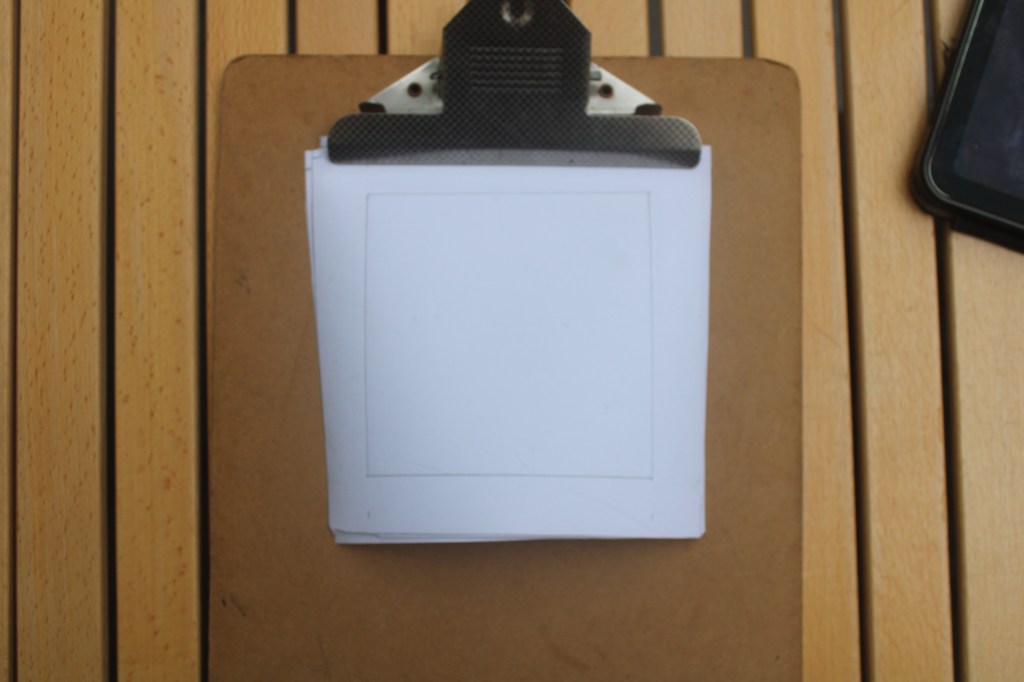
- Reclaimed paper from Reverse Garbage, cut into three squares of 15 cm
- A cardboard box of Ikea packaging, cut into four squares of 15 cm
- PVA glue
- Coloured pastel pencils
- A fineliner from Lousy Ink
- Embossed wrapping paper from Reverse Garbage
Methods
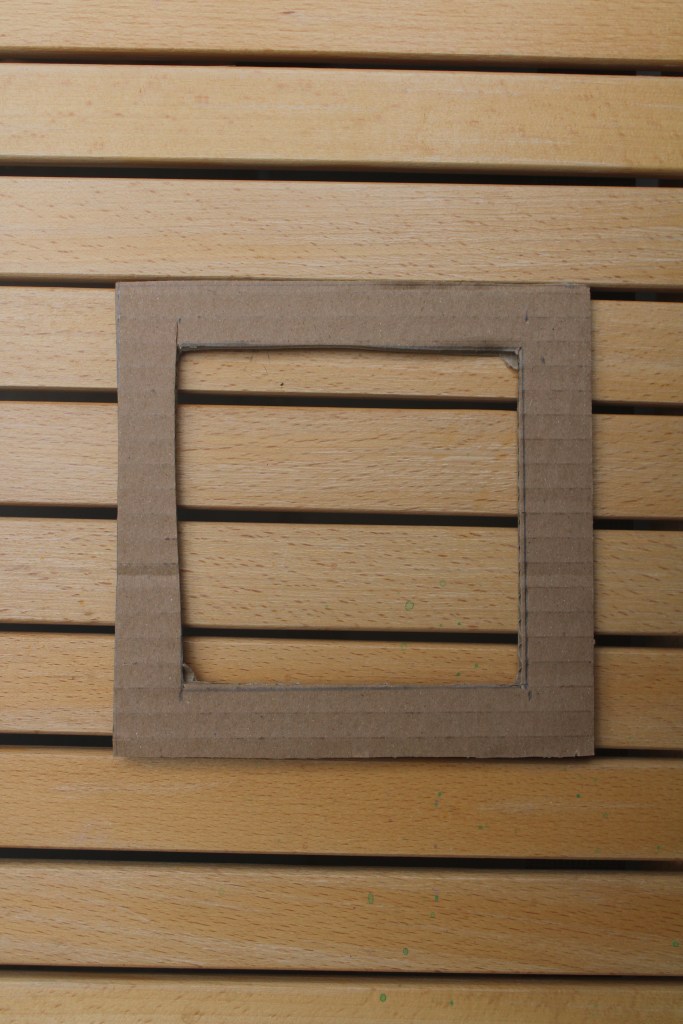
- I cut 11 x 11 cm square holes in all four pieces of the cardboard
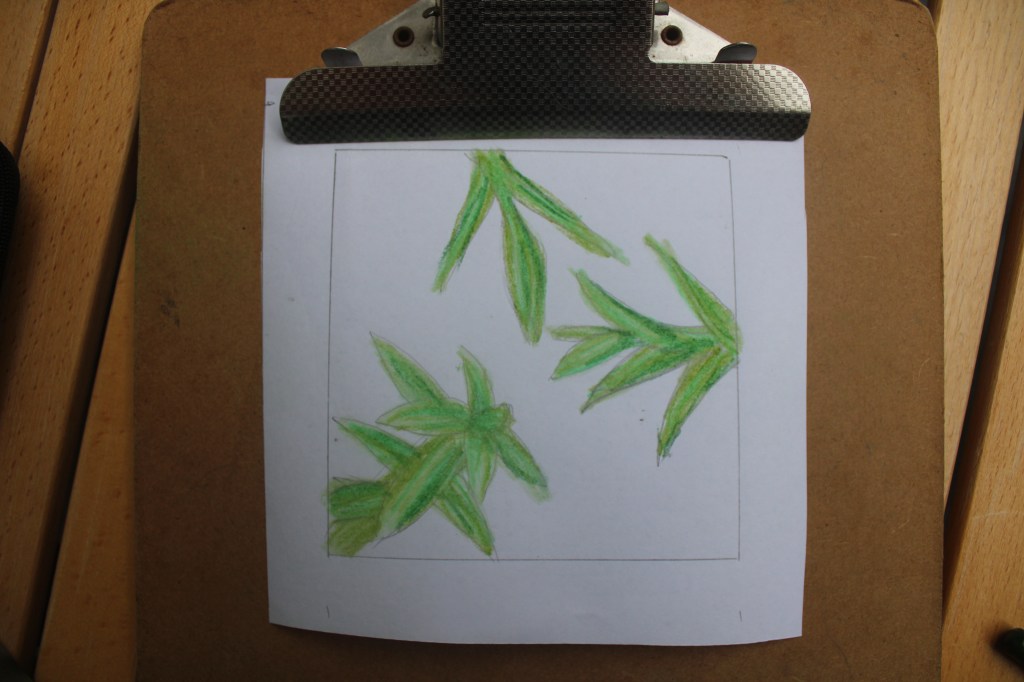
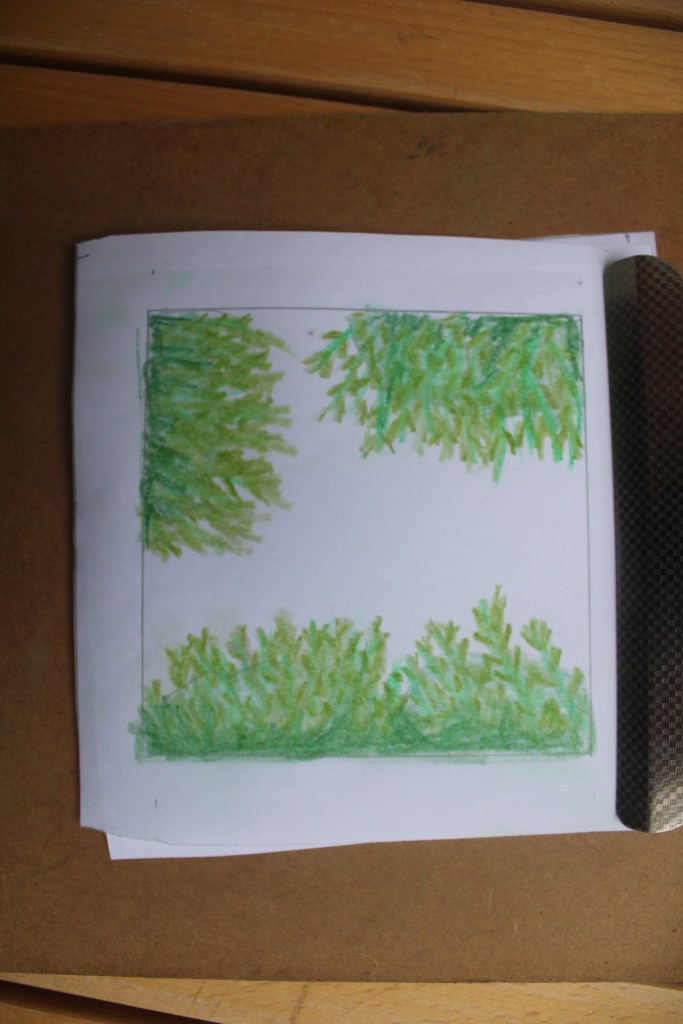
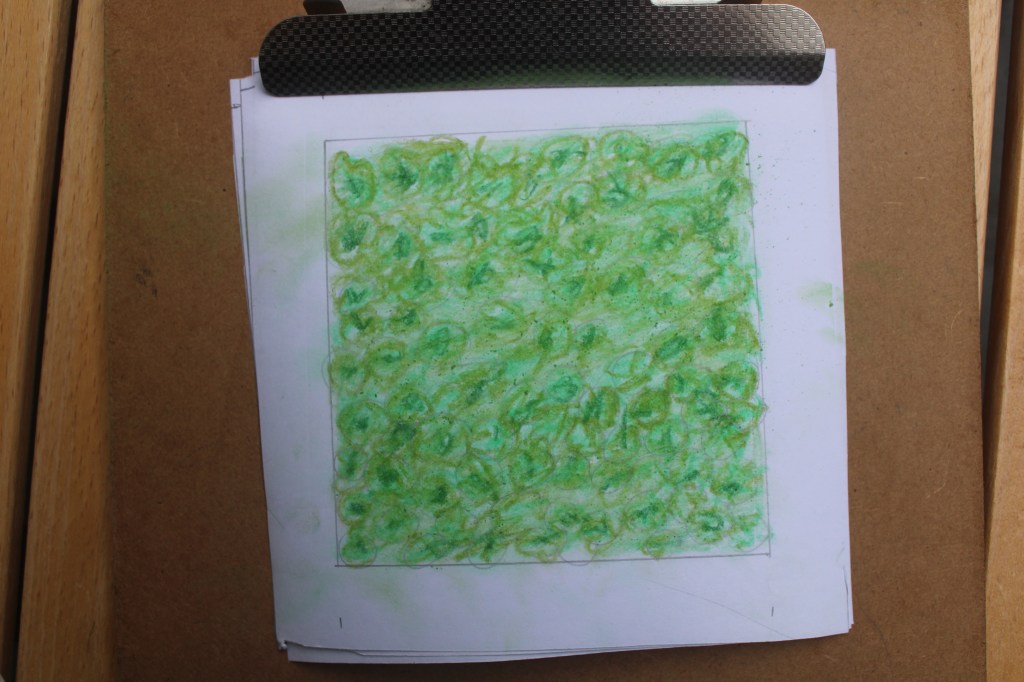
- I drew 11 x 11 cm squares on the paper. In my head this formed a ‘grid’ where there were layers of abstraction. The most repetitive, patterned scaled texture would be my background, whether that is microscopic or naked eye view. For moss, it’s naked eye.
- I filled in each square with a different scaled view of my chosen plant, ranging from microscopic, hand lens/ magnifying glass and naked eye observations.
- I would draw each layer conscious of the composition of the one behind. Using pastels which I would steam to set, and then doing details in fineliner.
- Using a scalpel, I would cut out holes of the top two layers to maintain the structure of the top layers, while maximising visibility of the layers underneath.
- I glued the paper and cardboard together, with cardboard – paper – cardboard repetitions
- I lined the front of the cardboard with embossed paper.

Learnings
- Layered paper craft gives the sense of an old play or movie set. They have a level of whimsy and conscious world building that I really enjoy.
- The microscopic is a fascinating world, which can be accessed in my home to appreciate the beings I live with and near.
- Emergence and whimsy requires delicacy which I think is why I am happier with these works than I was with my Closely Character Design.
 Eav Brennan