Making soft sculptures to reimagine the ethical framework of naturalist collections
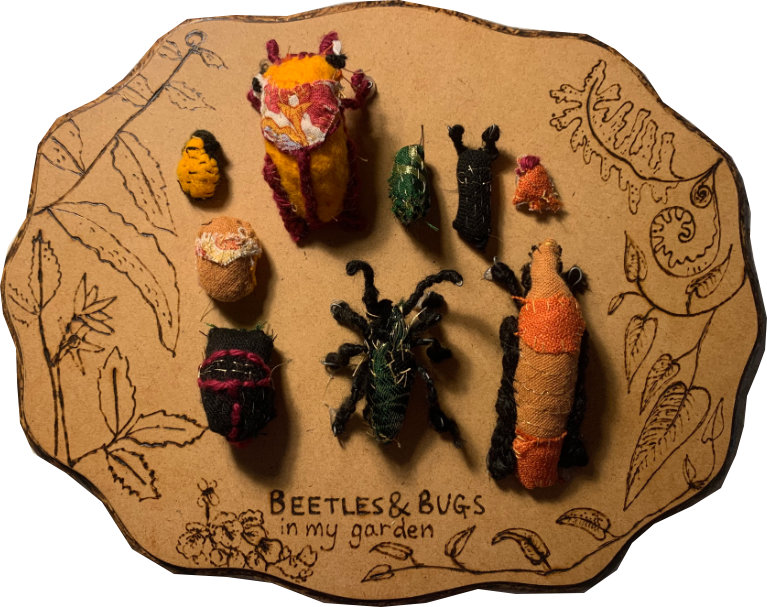
A key idea of the Anthropocene Naturalist project is how to reinvent the extractive and colonialist practices of the naturalist tradition, while capturing its curiosity, attention to detail and connection to the more-than human. Collections have always been a part of the western scientific observation of biology – both human and non-human. The action of collecting is intertwined with the theft of the Land I occupy as a settler: Gadigal Country and broader Aboriginal Land. The most famous example is the brutalisation and horrific treatment of Pemulwuy’s remains by the British. We not only murdered him and stole his body from Country, but lost him in the centuries that followed.
The collection of People, Animals and Plants in the name of Natural History is a blood soaked practice. Colonial genocide, as well as the slaughter of animals and plants for the purposes of collection have all been the way that naturalists have conducted their in-depth observational drawing and studies of all sorts of Lives.
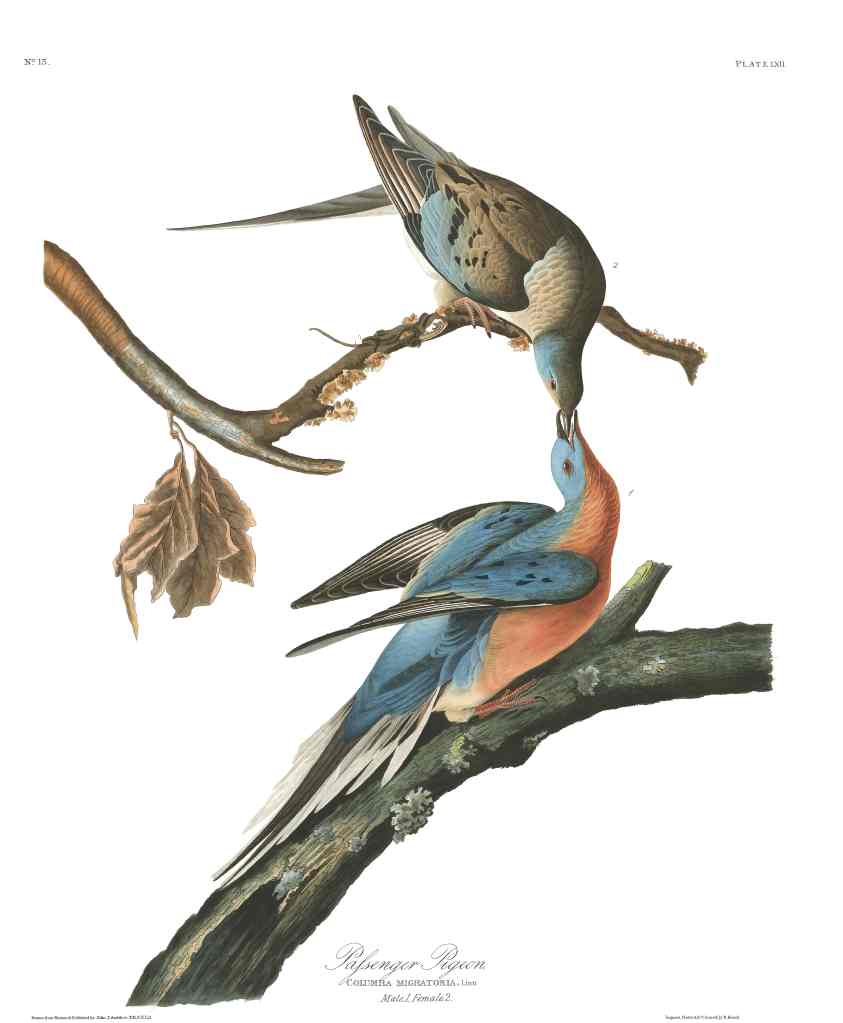
Knowing all this I always have profound discomfort watching how well received the earth toned cabinets of curiosity are at work. I see how people flock to the displays of the large illustrated herbals and preserved specimens in jars. I have watched hundreds of kids find bug hunts (catch and release, we don’t kill animals) the highlight of their day, if not their week. The enduring power of this tradition is, in no small part, because it’s pretty.
This was the foundational conundrum I wanted to think through by making a series of displays and soft sculptures that mimic the cabinet of curiosities of dead Creatures that are found in natural history displays.
Is this Kitsch?
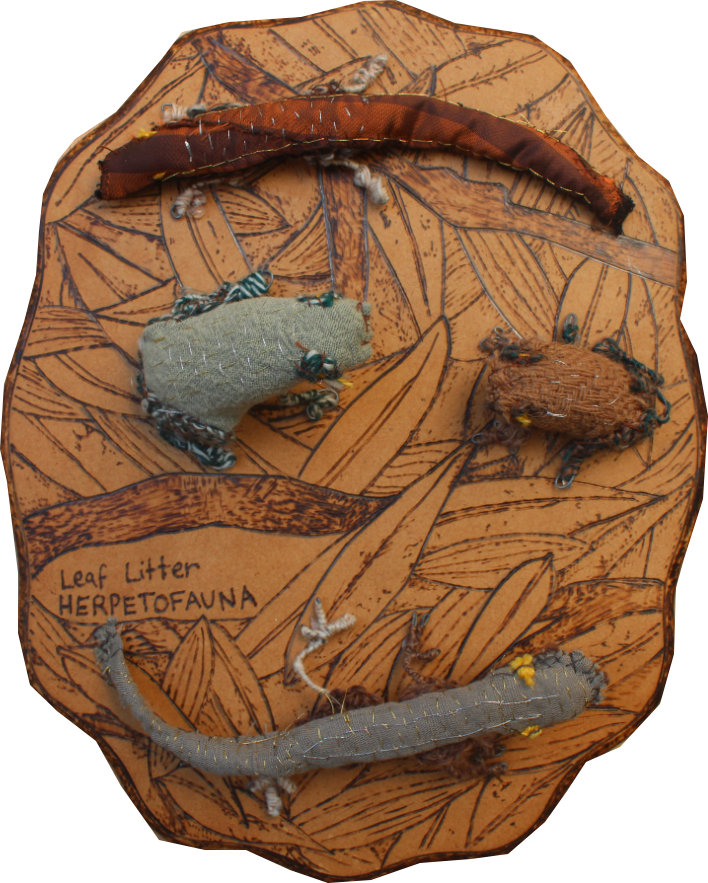
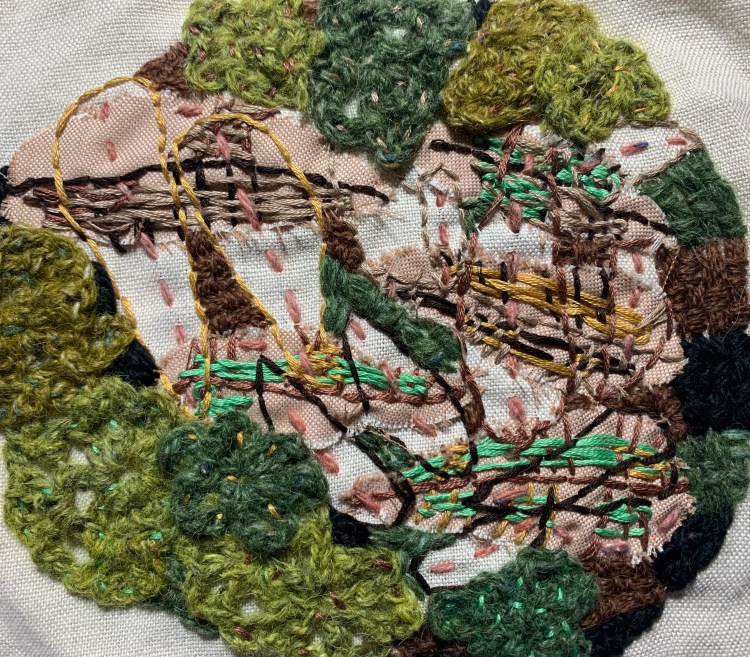
I say yes. For this project I’ve imitated a display cabinet of leaf litter herpetofauna (amphibians and reptiles) made from a bunch of trash. The spotlight-esque board and the busy background with animals rising from a 2D surface makes it look like a diorama. But documenting the process of making this work still captures why the collection of materials within my community and ecosystem and using making techniques I learned from my maternal lineage can forge paths connection and curiosity, even when making a fairly trashy looking final work.
Collection vs foraging
I am not certain about how I think about these two approaches, but right now I think there is distinction between the collection of objects, and the foraging of materials and beings. Even though the action of collection and foraging, especially when it is applied to antiques, reclaimed and second-hand materials, is exactly the same: You go and find materials, mostly in second hand shops, pay for them and take them home to store. It’s the same thing.
Yet for me, when I think of the action of collecting, it’s a taking where the collection itself is the paramount consideration. It is the objectification and exchange of goods for the purpose of accumulation. Foraging, meanwhile, involves relationships. It is about knowing and way finding to what you need, and only taking that. So when it comes to materials – even with the highly manufactured materials I used for this project – I strive to acquire them with a foraging mentality. Embedding who I got the material from (human or no) within my reflection of my making. For this project, I used the following materials:
- Tissue paper that my sister’s Christmas present to me was wrapped in
- Fabric from old overalls that I had already upcycled into my gardening belt, from prior projects in costume design and tapestry making, all traded from old friends or Reverse Garbage
- Wire and a hot glue gun which I had left over from a set design piece
- Excess yarn from my mum.
- The weird board from Reverse Garbage
Crafting
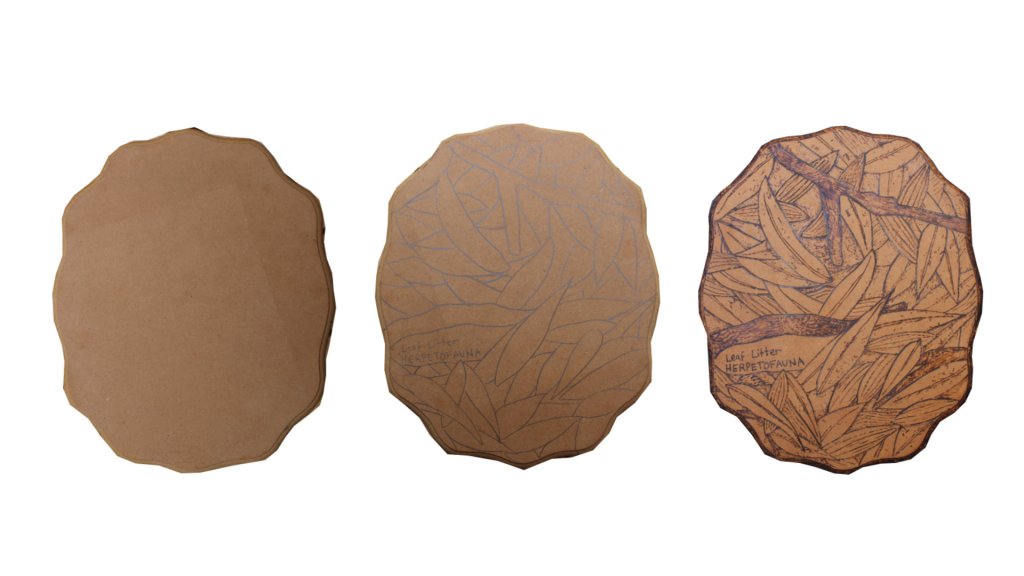
The first thing I did for Leaf Litter Herpetofauna was burning into the board. I reflected on my existing studies of leaf litter from previous artworks, and used the textures of the leaves as they accumulate on the ground from memory.
My focus then turned to the animals I have encountered living in the leaf litter, the darting skinks who make the ground shimmer when there are enough of them as they flee underfoot. The geckos who mostly live under the bark of trees but who emerge at night to hunt. The frogs who are always a source of universal delight and interest when they pop up at work. These are the inspiration for the soft sculptures, and so I reflected about how they look and respond in leaf litter. Rather than killing the animals, I use our encounters as a way to reflect on how they are in the world, and how I remember them.
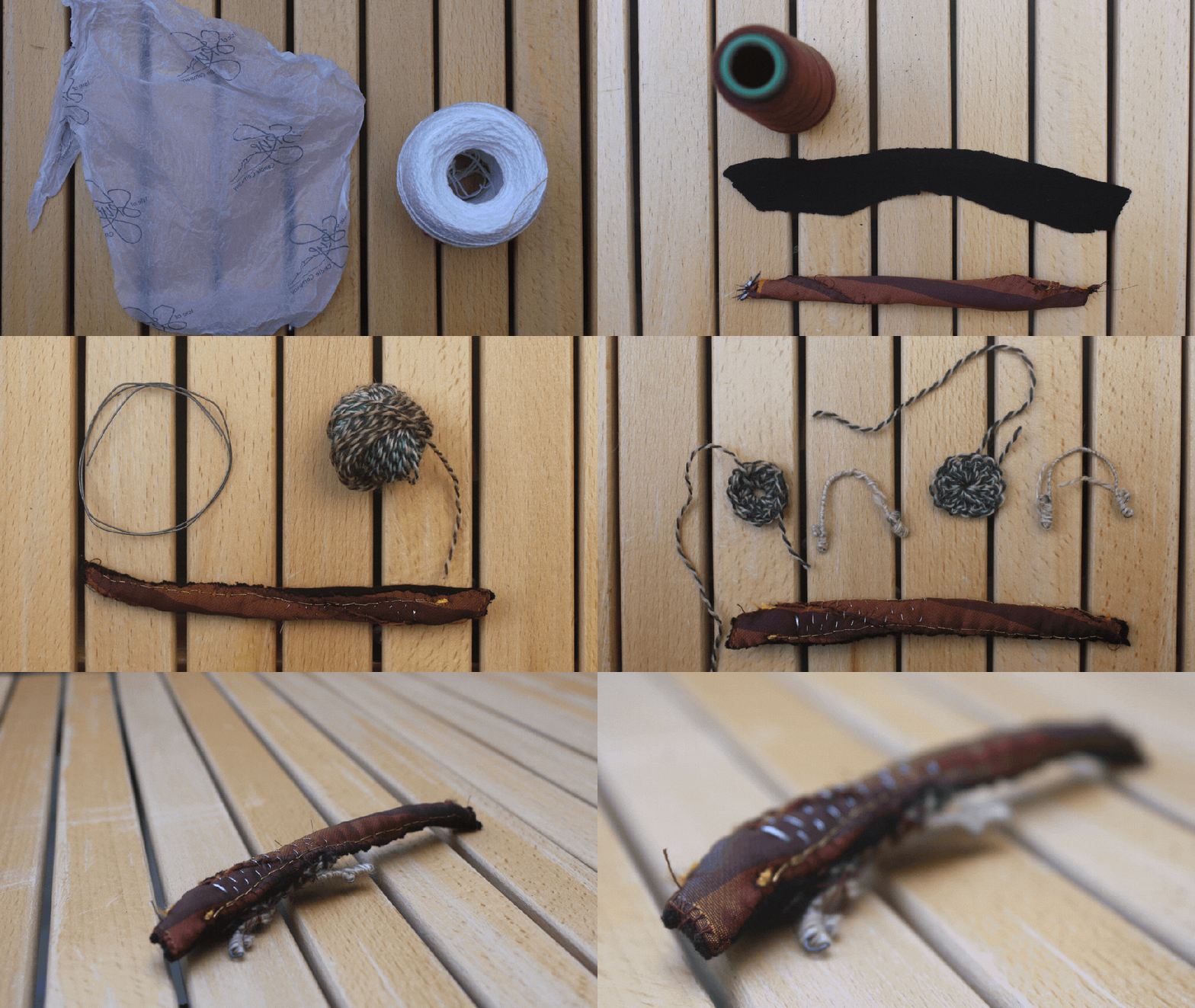
The sculptures were built up in layers of techniques. Weaving, mending, embroidery, wiring were all tools I employed. One of the things I love about crafting is the expansive mindset I embody as I work. I remember sitting with my mum, sister and grandma as they corrected me on my techniques. I remember sitting with friends and chatting as we sew and resolve to do it again soon. My hands become something bigger than myself, a part of a lineage and community as I build up a messy, simple skink to glue onto the board.
The result
This series is a tool of reflection and memory. It is an imitation of a collection, which seeks to counter the accumulation of bodies for the purposes of display. It is the messy, weakly resembling recreations of encounters instead of the dead remains of one being in the relationship, where they were killed, pinned or stuffed by the other. It is a product of a lively and ongoing web of relationships between leaf litter, frogs, geckos, skinks and my human community. It was also fun to make. I think I’ll do an intertidal one next.


what is that made with? Cool!
LikeLike
Thanks! it’s made with tissue paper, wire and fabric on board.
LikeLike
I might be able to make that! Thanks a bunch, Eavbrennan!
LikeLike