The single celled organisms who have collectively fuelled the oceans and atmosphere for millennia.
The story of how I made this book is here.
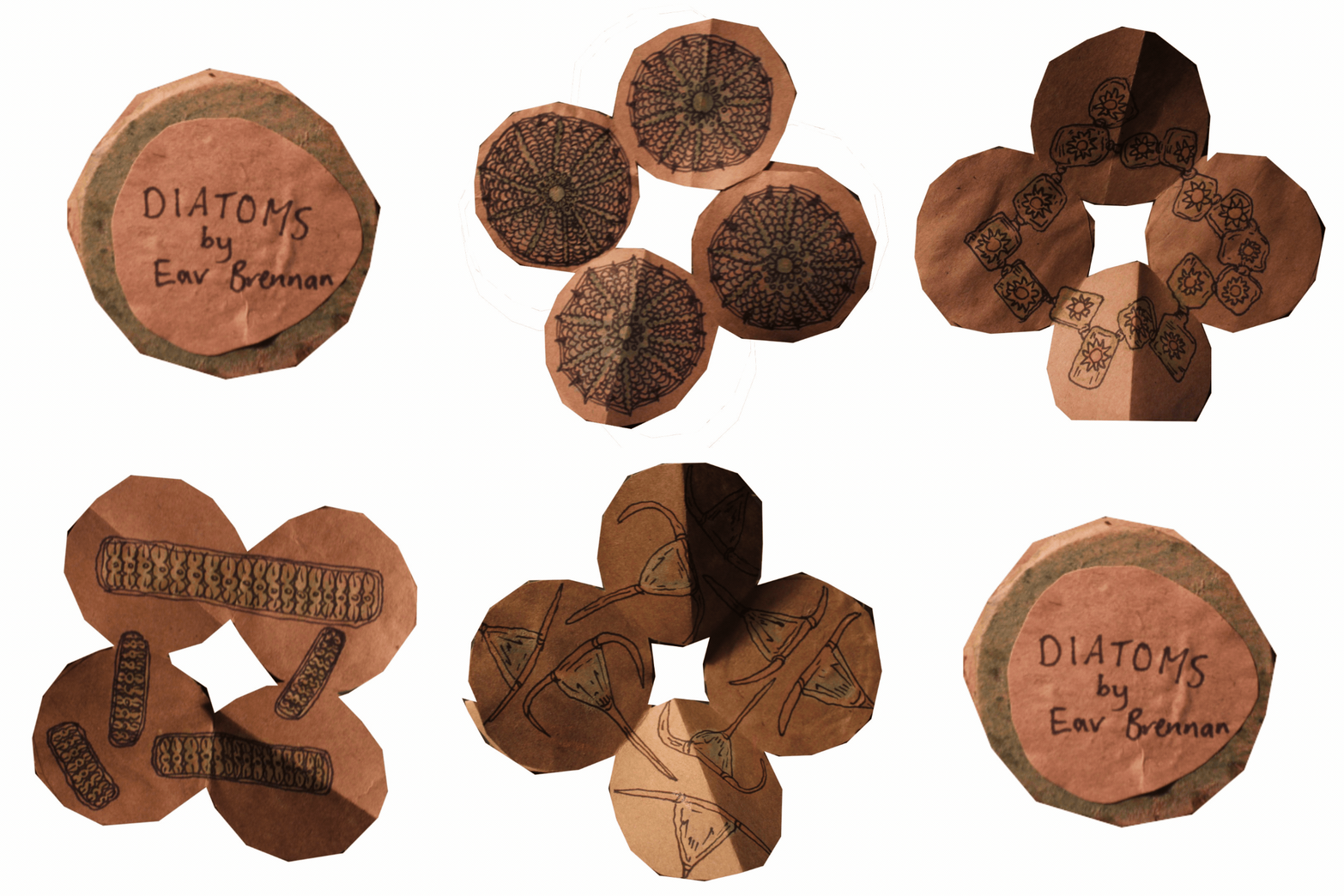
Phytoplankton are the photosynthetic, microscopic beings who live in the upper columns of the worlds’ oceans. The most common phytoplankton – diatoms – have glassy shells of silica, which can form incredible structures and patterns. These plant-like beings form chains of green, glassy structures, growing from the sun. Each individual may be tiny, but collectively these phytoplankton are responsible for half of all ecosystem productivity on Earth.
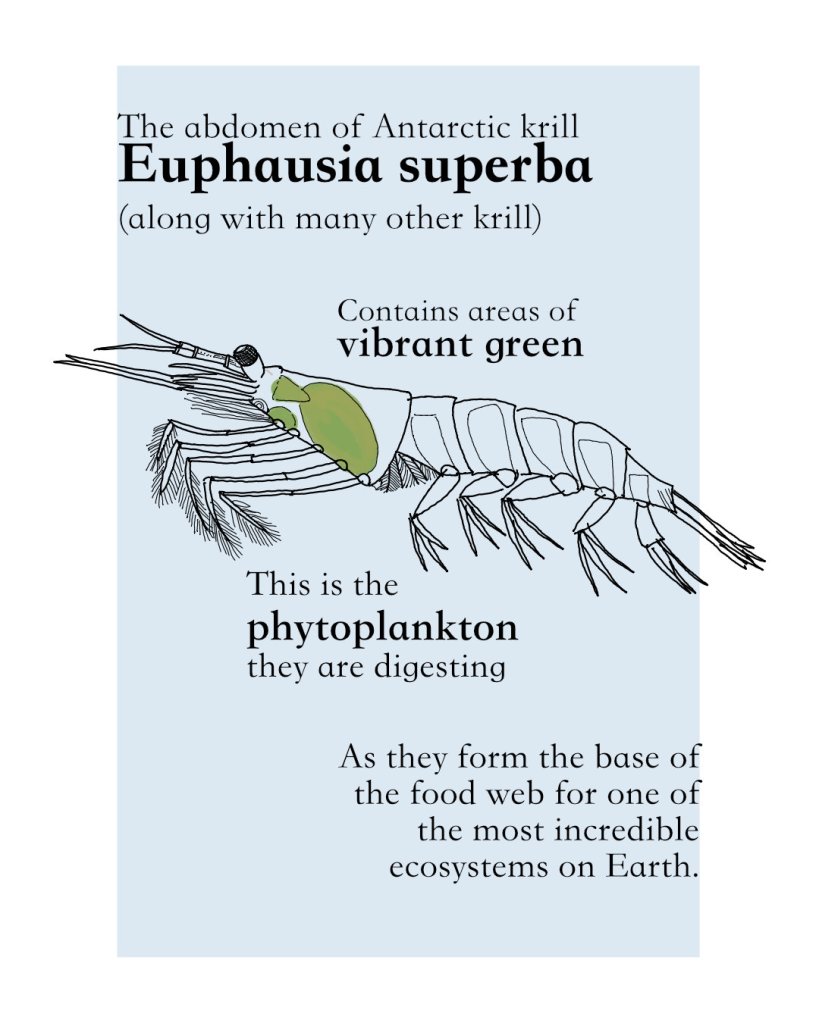
A great example of how phytoplankton contributes to life on Earth is how they are the primary food source to Antarctic Krill. Krill spend their winters feeding on the diatoms that dwell under ice sheets in Antarctica, and in summer the large blooms of phytoplankton in the polar sun fuels one of the greatest feeding frenzies on Earth. Whales, penguins, seals and fish all rely on the krill as their primary food source.
Where and how phytoplankton grow are determine by a few elements. They need sun and nutrients to grow, so the highest productivity areas are generally the dense, nutrient-rich upwellings of the Western Edges of the oceans (known as Western Boundary currents). These are areas where key ingredients like iron and nitrogen are forced to the surface – where the sunlight is – making a perfect potion for productivity. But even in the low-nutrient, warm waters of the East Australian Current, there are phytoplankton blooms which move and shift with the eddies. I’ve put one video of this below from the Integrated Marine Observing System.
Because they are so tied to ocean currents, I’ve been wondering how these incredible organisms will fare during this year’s record-breaking El Niño. In the last extreme El Niño in 2015/2016, phytoplankton blooms shifted because of the conditions. In the Antarctic Peninsula, there were very intense blooms that were spatially confined to certain areas. Likewise in Peru, overall blooms decreased, but there were more intense phytoplankton blooms in the 25 km near the coast.
These mysterious beings are having a mysterious response to our warming of the planet. I wanted to appreciate them in this book, as – despite their abundance – they are incredibly precious. Silently and unseen, their blooms create the oxygen we breathe, the climate we need, and the animals I love so much.

