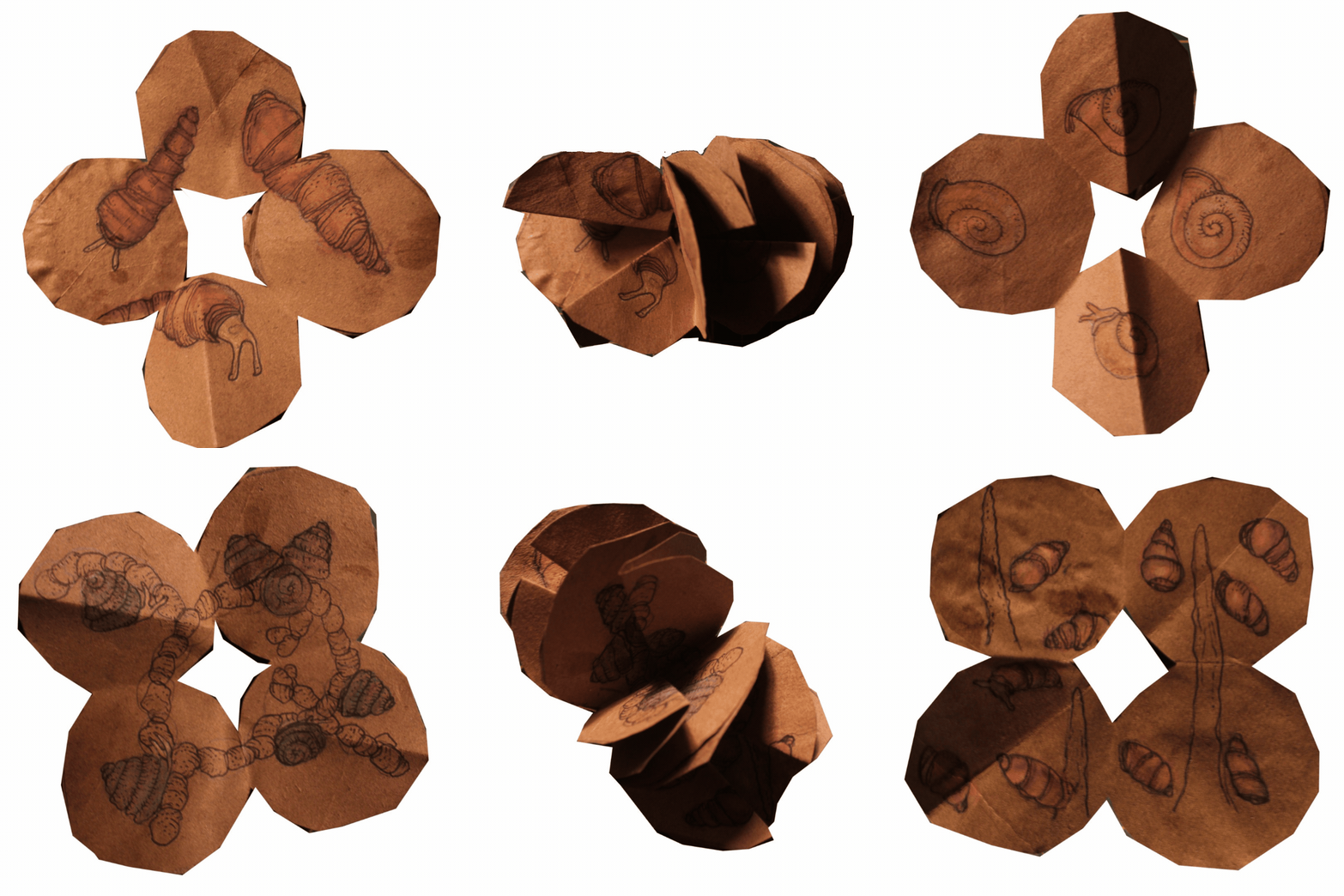
I explored ways of visualising emergence and cycles by making a small book about snails.
Finding alternatives with materials I already have
The idea of circular books was not one I was exploring until I realised the multitude of small wooden circles I had purchased from reverse garbage were too engrained with their existing logos for them to be sanded off. I bought about 30 circles to burn and carve into, but I ended up with a multitude of Hiking for Healthy Hearts tokens which would not come off.
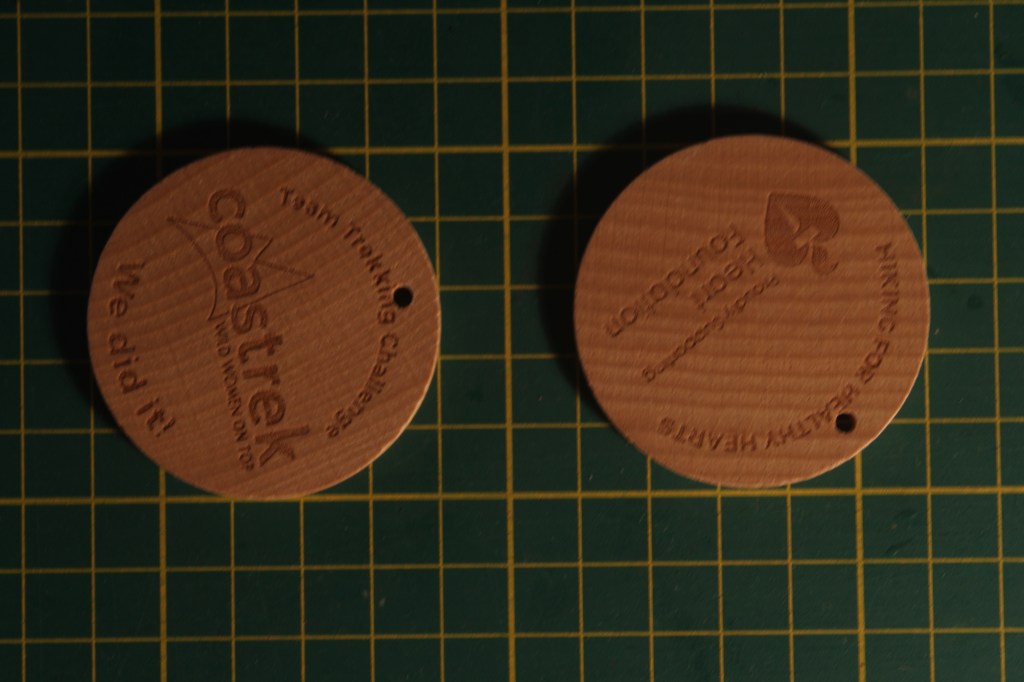
So I figured they might make nice tiny book covers for circular books. My algorithm has showed me a whole heap of circular book options, and I was excited to try one that also had a fun paper chain, uncovering effect of four circles per page.
Emergence and Cycling in Nature
I’m looking at creating an almanac for the next year, documenting the life cycles of my ecosystem as they endure an El Niño unlike any I’ve ever witnessed. The El Niño Southern Oscillation (ENSO) is a wave, a cycle that determines the ecological path of the whole world. The creatures I drew for this book live in the mangroves of Gweagal Country. Their lives and habitat are defined by the lunar cycle. Each small being has their own way of emerging, of introducing themselves to the outside world, and moving within their own spirals – their shells, along with the spirals that define animals’ ways of moving in their habitat. I want to explore page structures that are also circular and cyclical in nature.
Why snails?
The snails I chose to highlight – Zebra Top Shells, Moon Shells, Common Winks and Mud Whelks – are all native to the swamps I work in. We encounter them most when we’re catching (and releasing) crabs. It’s always challenging to get kids to focus on snails, when the crabs are much more colourful and active. Once you ask them to actually slow down, it’s always nice for them to learn that there are different types of snails and they interact with the world in different ways.
The biggest difference between these snails is that the winks and top shells are herbivorous grazers – feeding on the plant matter along the ground in the swamp, while moon shells and whelks are predators – eating zooplankton and preying on smaller snails. Many people don’t even count these guys as animals, as they are often still and slow moving. Stay a while, and watch, and you might see them move very quickly when needed.
One of the most impressive battles I have ever witnessed was at the most threatening time of these creatures’ lives. The tide was steep, and water was receding across the mudflat at an alarming rate. Across the sand, animals were burrowing, fleeing, and swimming as fast as possible to avoid suffocation in the air. A blue-lined octopus was frantic, and I watched as they contorted themselves into a burrow, where the water remained enough so they could breathe, waiting for the tide to return six hours’ later.
It was at this point that the moon-shell who had build the burrow took umbrage at the invasion. Extending far beyond their shell, they shot out and dealt the octopus a shell-whip to the head. The octopus, tentacles akimbo, flailed to get a grip on the snails’ soft body. The moon-shell dodged their advances and dug deep into the mud, only visible from the small lump and trail of disturbed sand following their path. The octopus descended once again into the now-empty burrow. I had never expected a snail to escape a fight with an octopus unscathed, let alone deal them a blow in the process.
So I made a book of snails, because watching snails is an excellent thing to do.
Methods
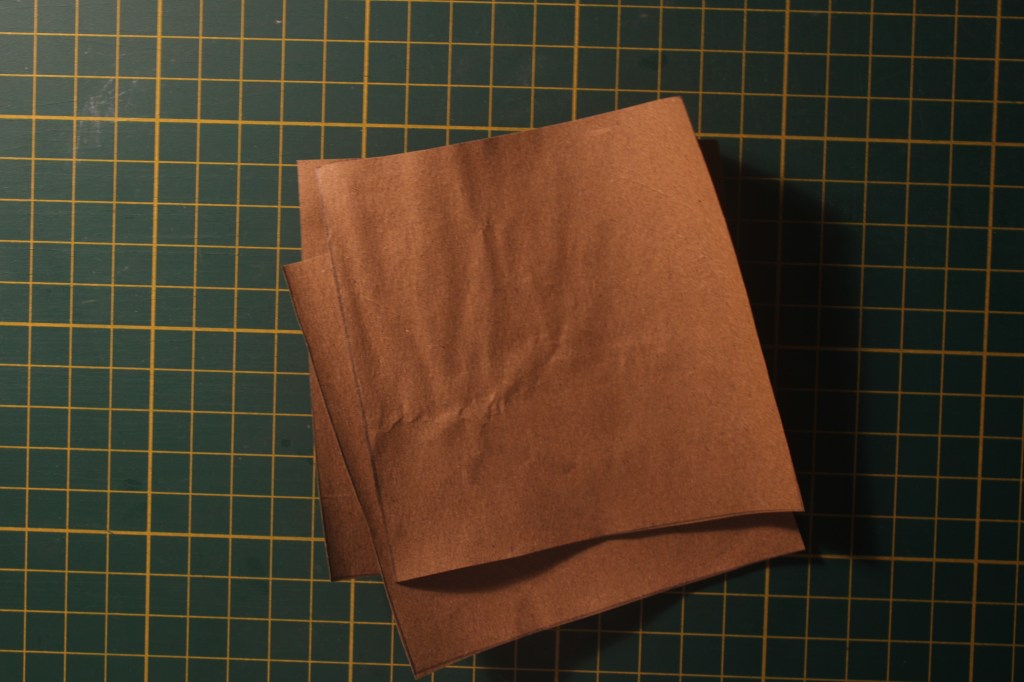
I began by measuring the diameter of the circles, and cutting four squares of an old paper bag that measured 2 x diameter. In this case that was a 10 x 10 cm square.
Then I would fold them into quarters.
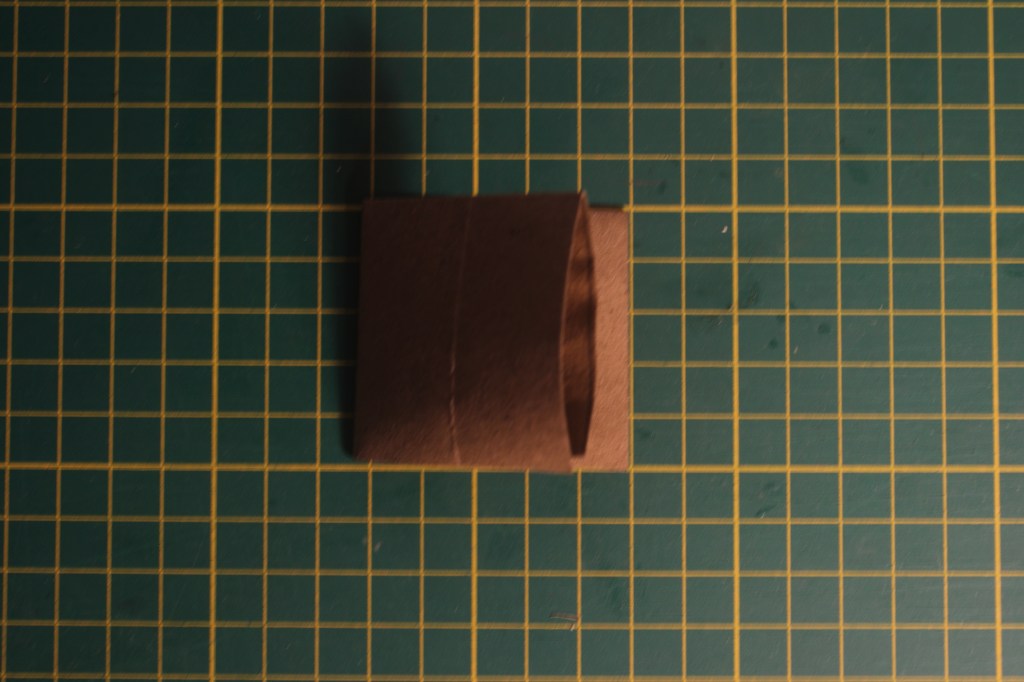
Trace the circle over the top and cut so that the paper remains (only just) attached.
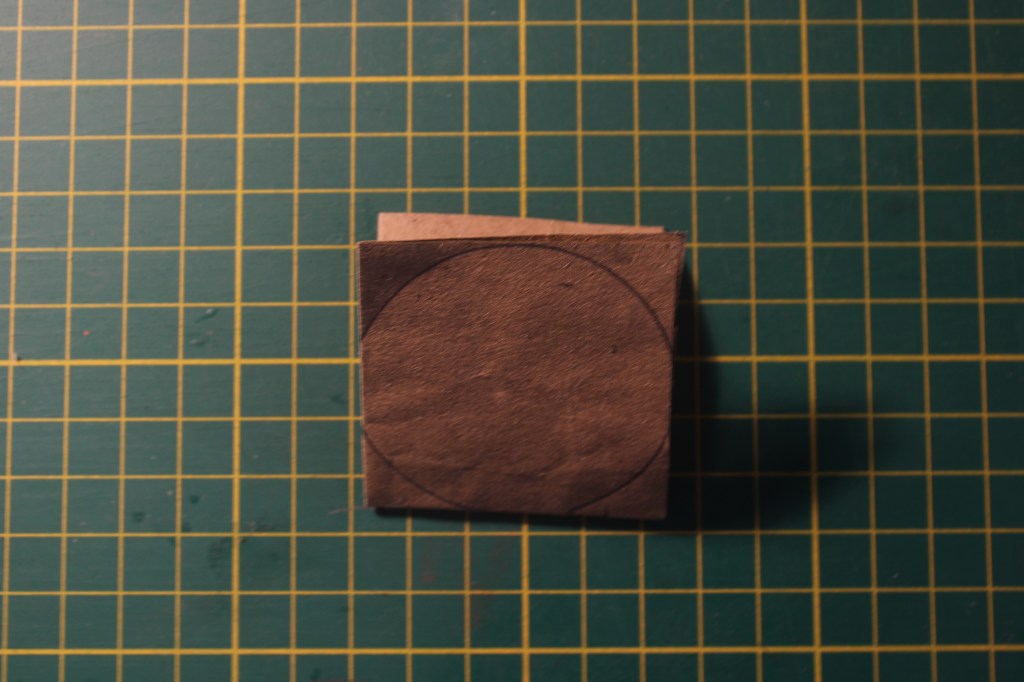
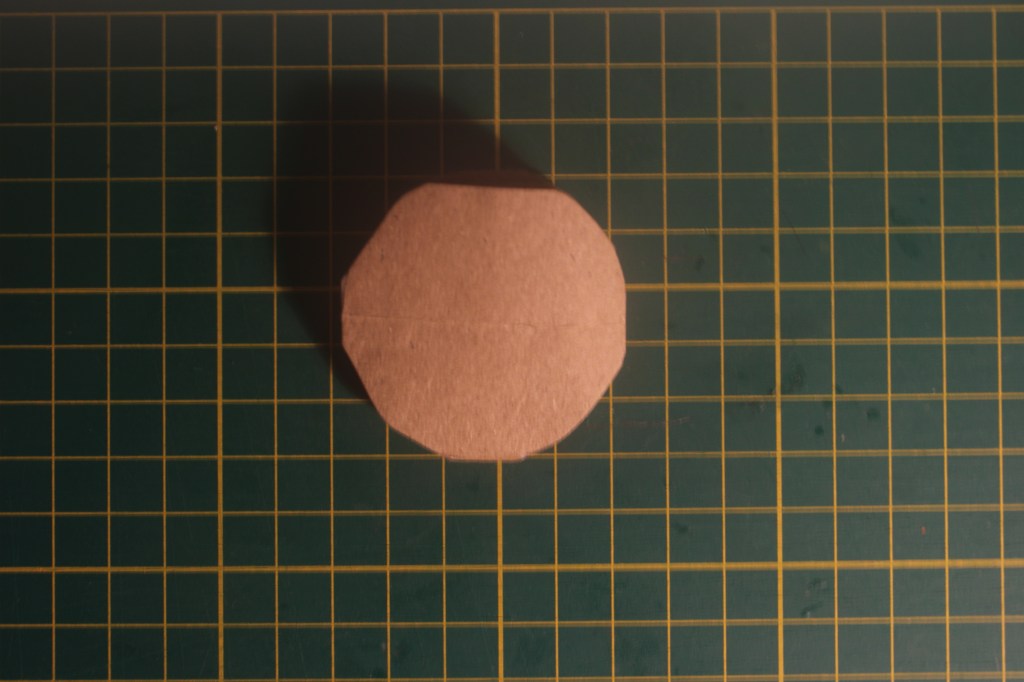
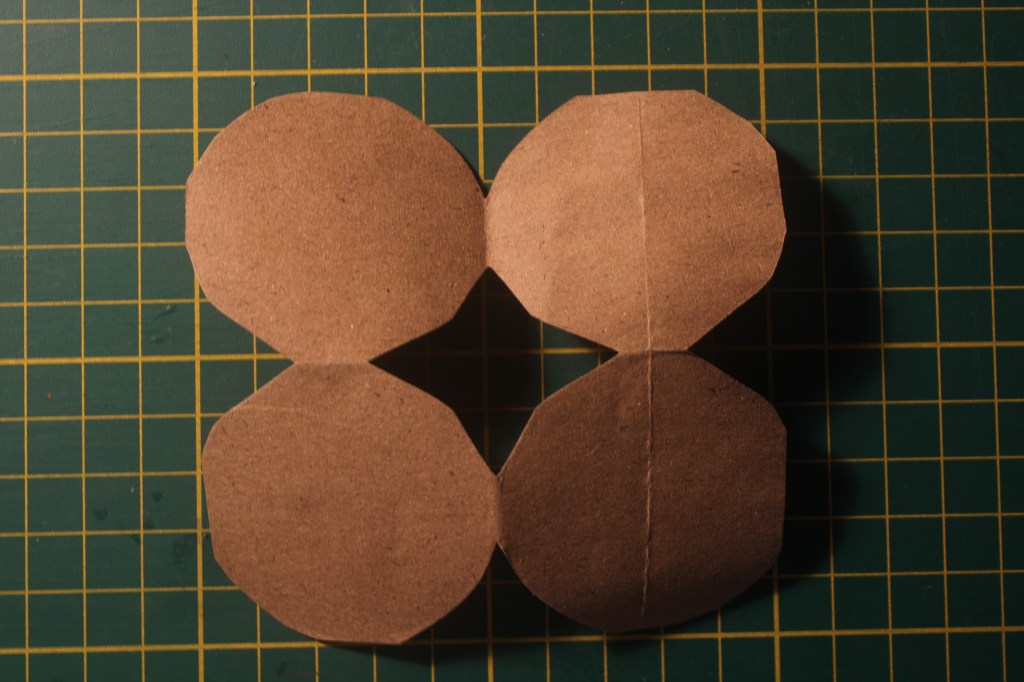
Then I drew the snails on each page, steaming the pastel pencil for it to set.
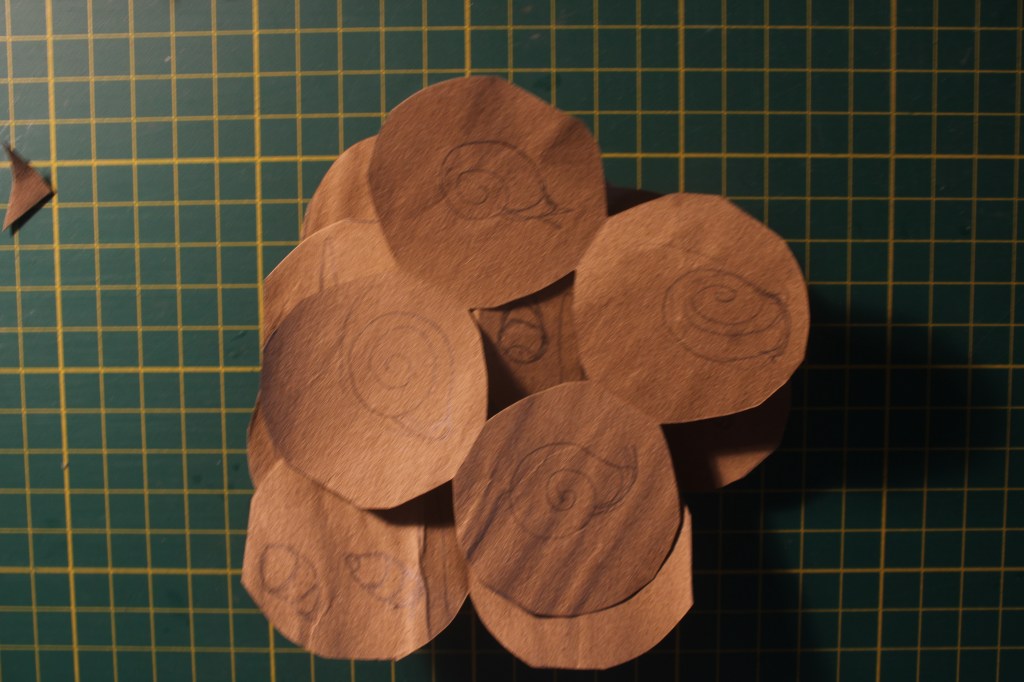
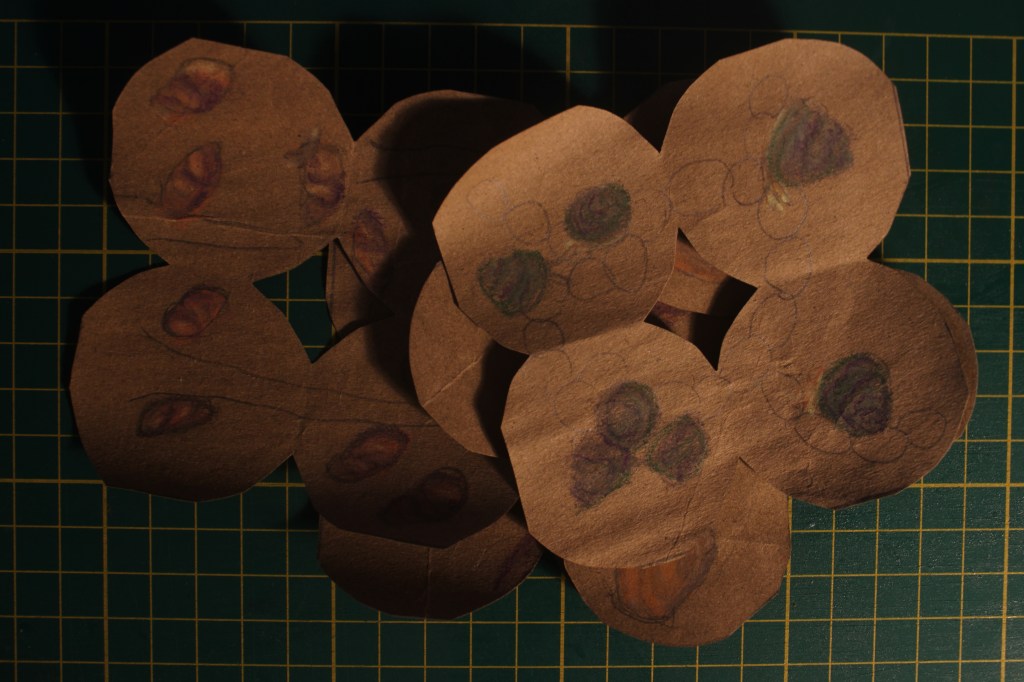
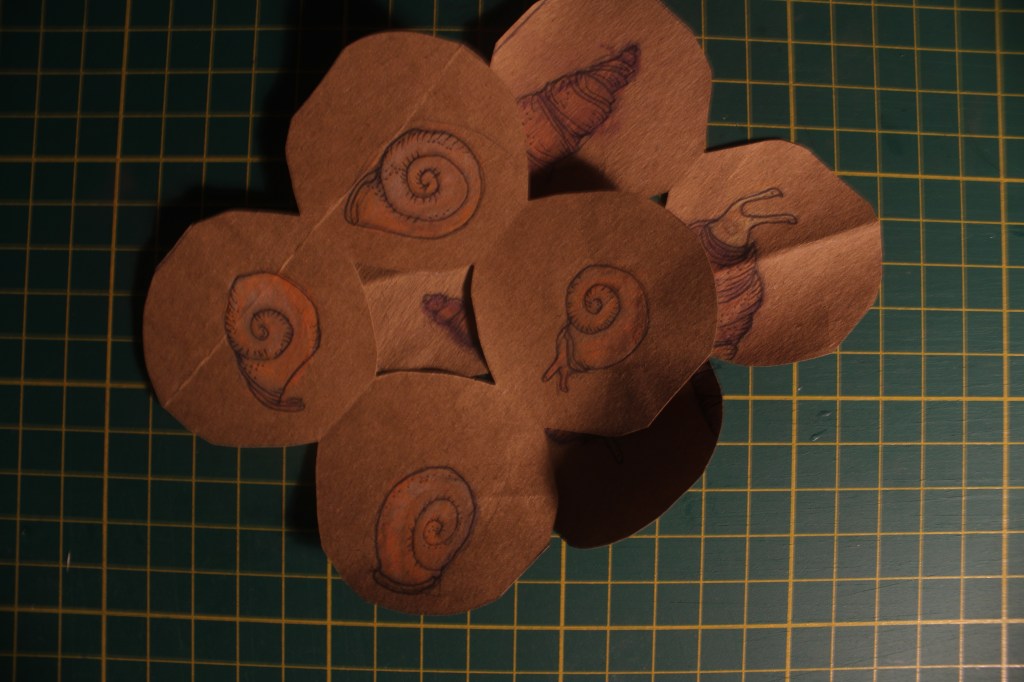
Then I folded the pages so that one alternating set of circles was folded in half, inwards, and the other alternating set was flat.
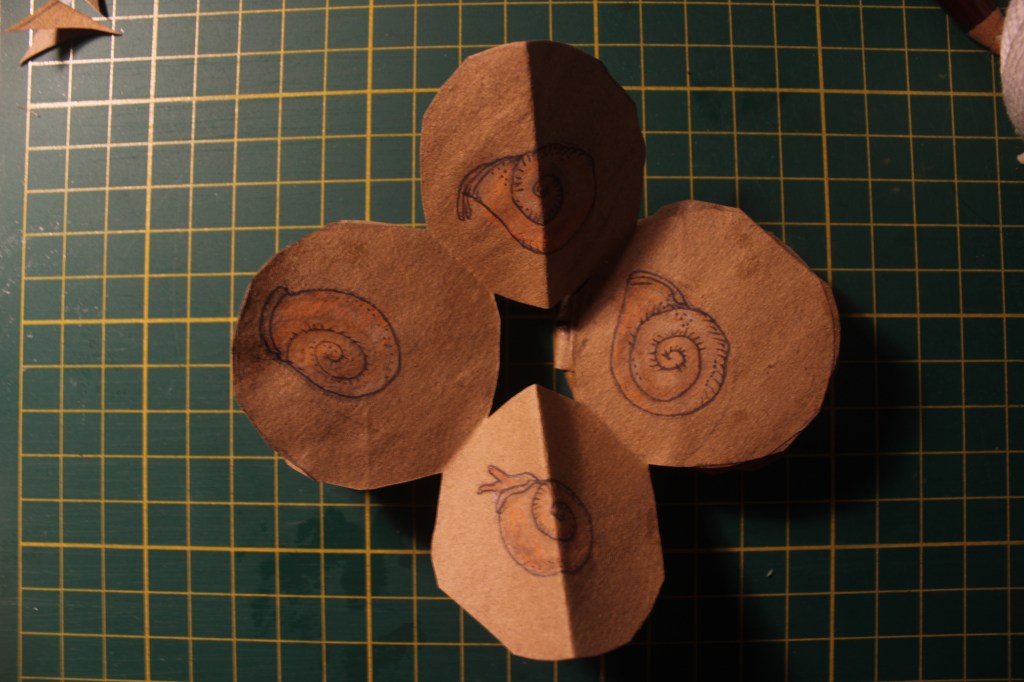
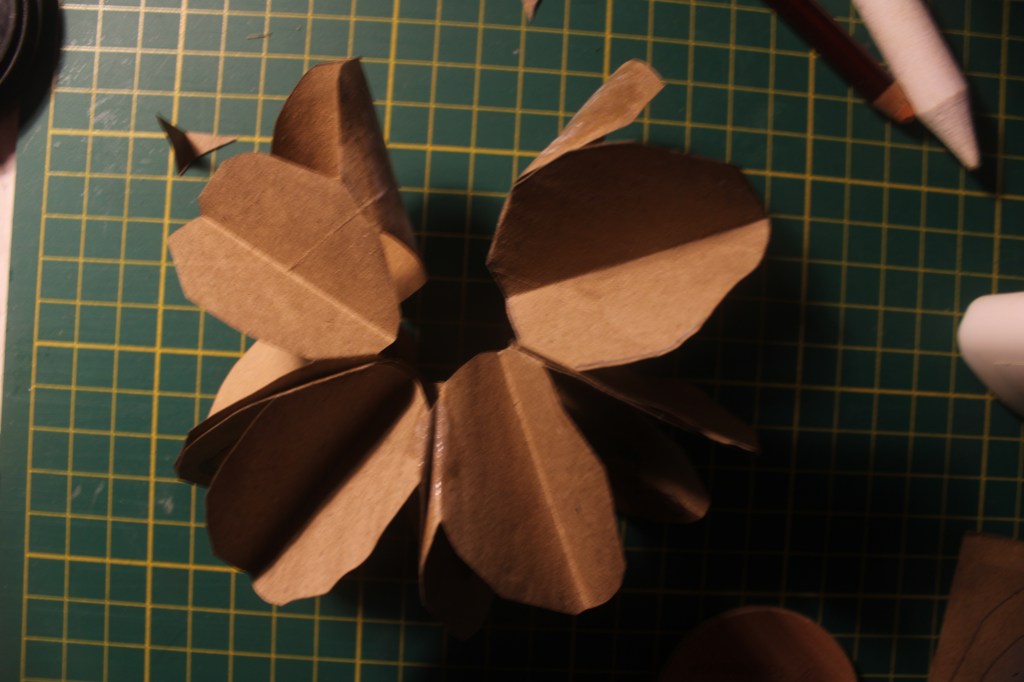
Then I glued the pages together, and glued them to a (covered) wooden circle.
Once it dried, the book was complete!
What I learned
- I am unsure about this folding style, I think it would do well as an addition to a rectangular page, but maybe not as a whole book.
- Paper bag paper is not a good paper for book making, it warps too easily.
- Tiny, circular books are very whimsical, and I am interested in maybe making signatures and binding them together.


One thought on “Prototyping circular books”