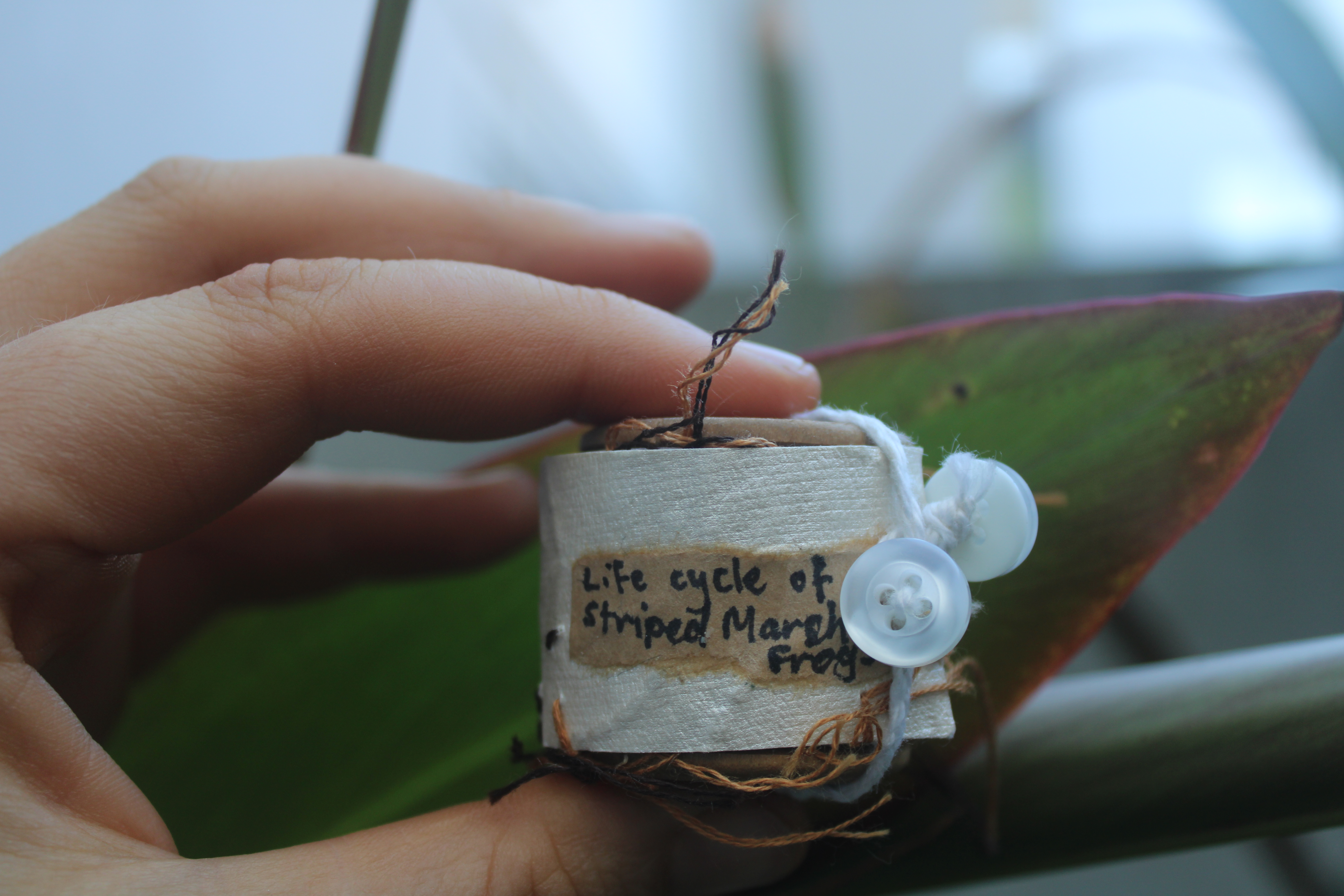
In the past month or so, I have been making a lot of small, textured objects. Most of these are a mixed medium of paper, wool, fabric, thread and wire in a corked test tube. One was a scroll of the life cycle of a striped marsh frog on an old wooden spool of domestic thread.
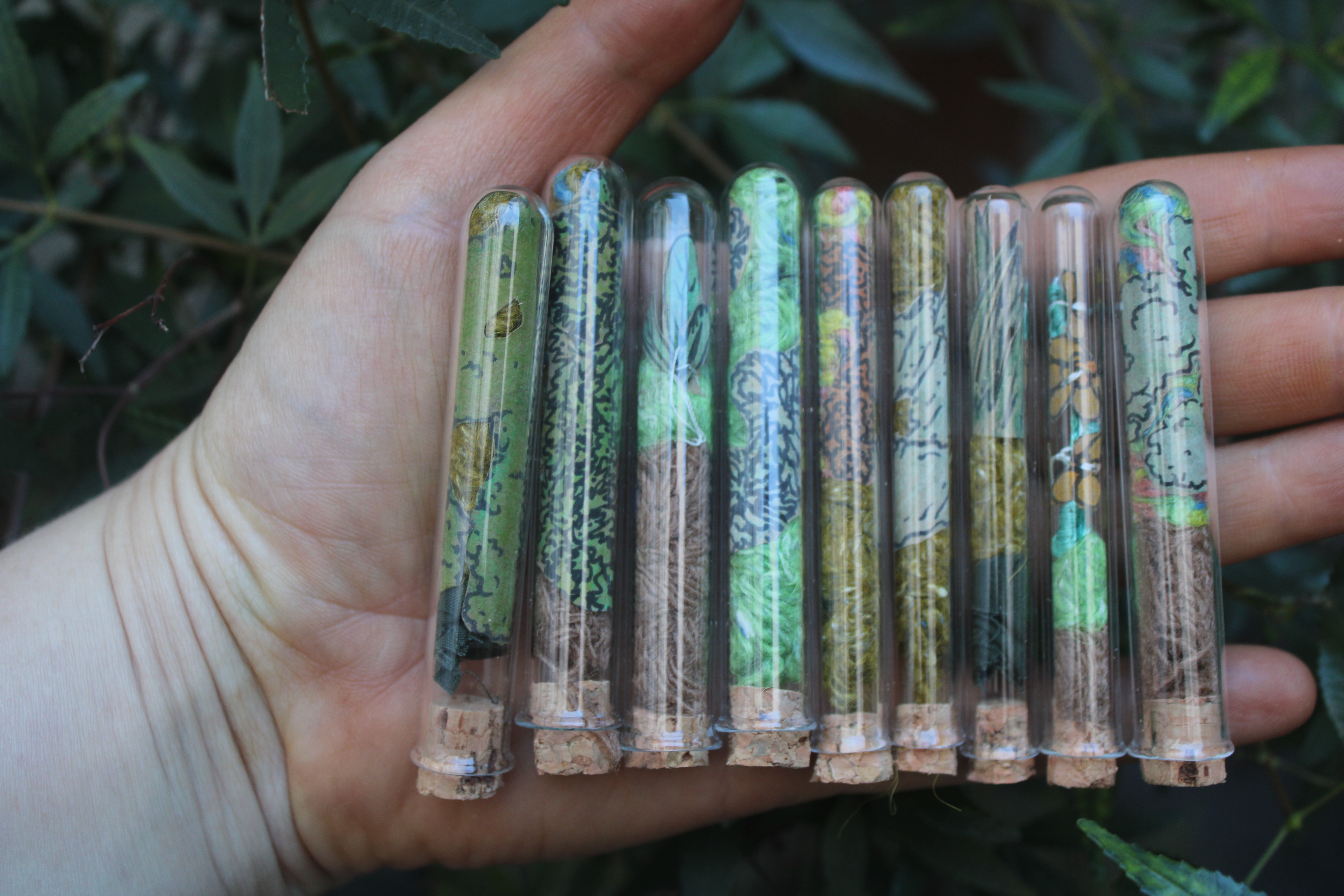
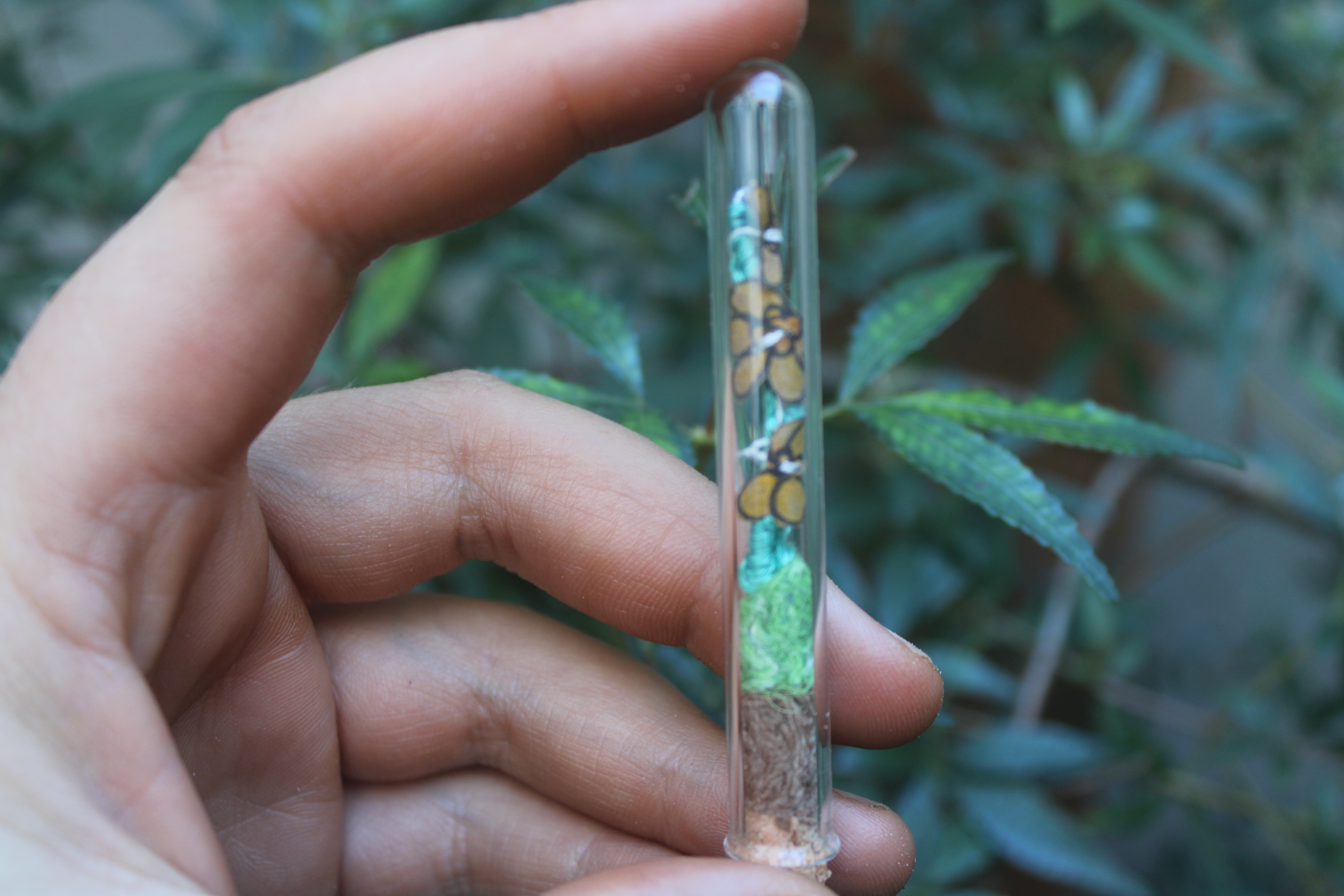
This post is what I found from the act of thinking through making, or the reflections that I have when I used my hands to make these works.
The power of being small
Life on earth is held up by a myriad of small beings. Whether that’s microscopic phytoplankton (tiny photosynthetic organisms) or zooplankton (tiny animal organisms); the single spores of fungi or bacteria. Our lives rely on a healthy balance of these beings thriving in the air, the water, the oceans and soil, as well as our own bodies. We, as large vertebrates, are entirely descended and dependent from countless generations of creatures we will never see.
There is power in being this small. Stromatolites are communities of cyanobacteria that work with sediments to form rock-like structures. An individual of cyanobacteria is microscopic, but they are some of the most populous life-forms on Earth. They have weathered every single mass extinction, and collectively shaped the world – being the earliest known life-forms to produce oxygen. It is no surprise then that they blend with sediment, resembling living rocks which have withstood 3.5 billion years of change.
Capitalism and mass production – the creation of smallness
I am a human living in the year 2026. The pressure to make objects quickly and at scale is high, so too is the pressure to act boldly, to make myself – my art, my thoughts, my activism – bigger and bigger until I get the attention of the powerful. Making the test tube objects in particular was a practice in resisting the urge to turn these textures, these observations, into a production line of pretty things.
It was a challenge to then do justice to the small lives I was trying to represent in these works. Knowing that these lives are under strain, and a worthy of observation, I strived to extend my focus to the textures, colours and spirit of the fungi, mosses and epiphytes. These lives that – under capitalism – are systematically erased, despite being the wellspring of all the life we hold dear.
A huge mass of many small things
My friend Denali posted years ago about how strong movements are like a well-made garment. Each stitch is a person who is only as strong as their connection to the next thread. Where no individual or small groups of individuals are heroes or nexus’ of change, but where the power within the movement is spread evenly, flowing through the weave and absorbing tension as needed.
This analogy is similar to how mosses, stromatolites, mycelium networks and even ant colonies grow. Slowly, but collectively, they have formed a vast blanket of life that stretches through millennia. Where each individual has helped shape the chemical and biological composition of the whole planet. A small stitch, when embedded within the fabric of a movement for life, is how the longest lasting and most prolific organisms on Earth have always survived.
 Eav Brennan